Defence & Simulation
Mission Rehearsal, Soldier-Borne AR, and Platform Sustainment.
India's defence ecosystem is moving toward multi-domain readiness and sovereign technological autonomy. XR (VR/AR) is the spatial layer for that shift, redefining how forces prepare, operate, and sustain mission readiness at scale.
64
Max networked users
100%
Indian-origin IP
Combat Simulation & Mission Rehearsal
Train Without Ammunition.
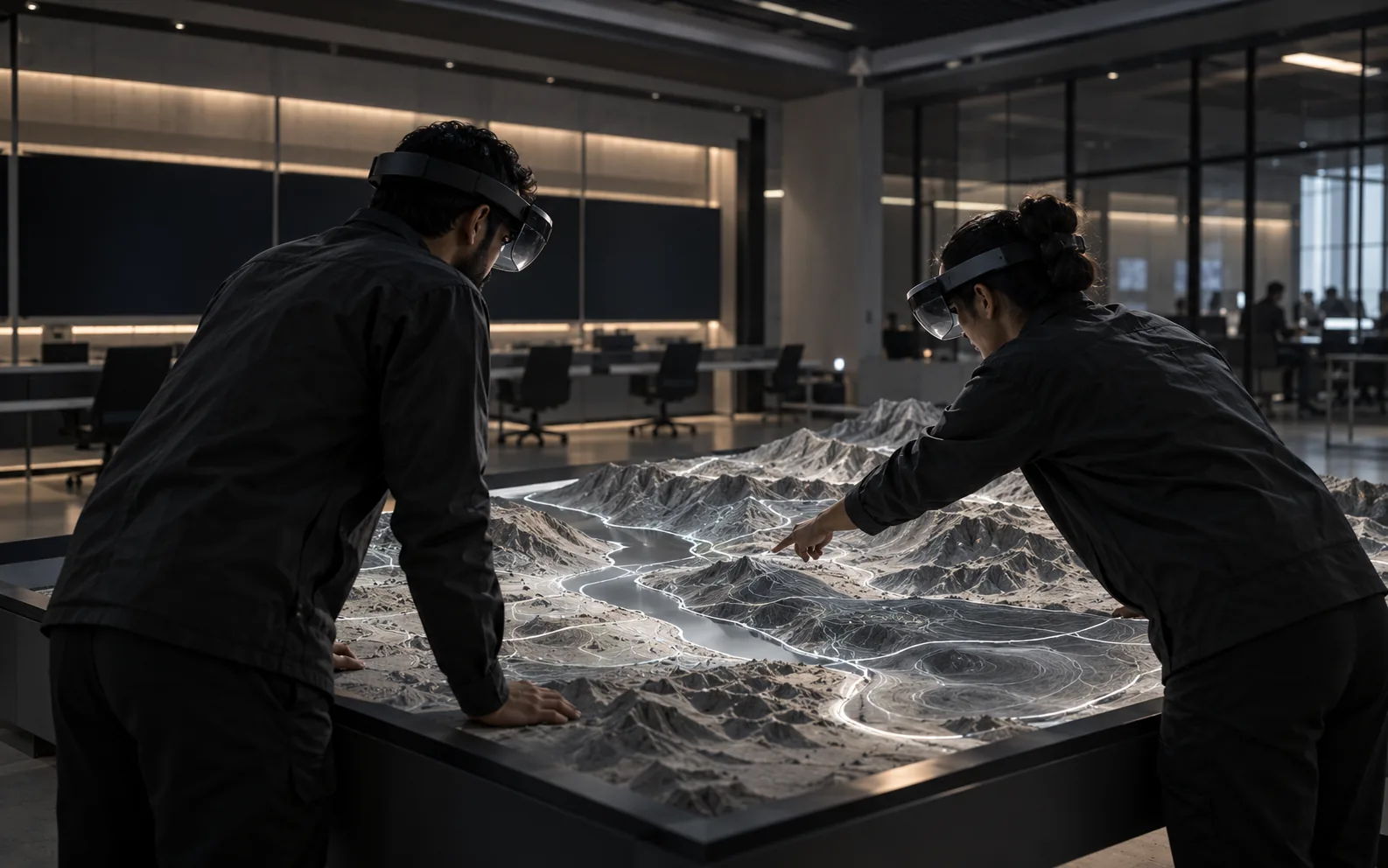
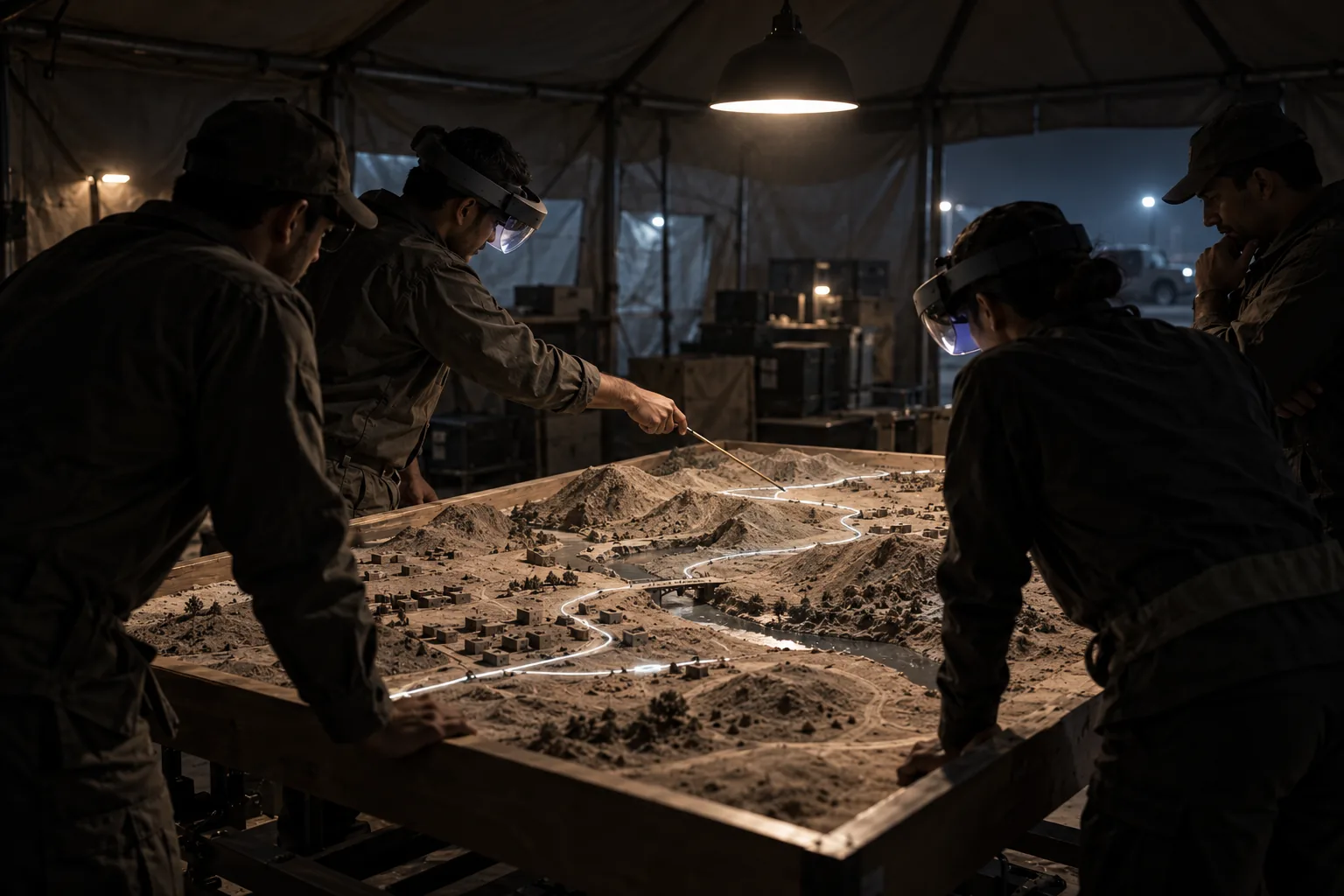
A networked urban-warfare rehearsal for up to 64 trainees runs on real-world geospatial data, not an abstract range model — squads clear a modelled structure together in a shared VR environment while a T-90, BMP-2, or Rafale sits rendered alongside for walkaround familiarisation and maintenance practice, without the actual platform ever coming off the line for it. That's the resource the exercise is really protecting: not the rounds, but the hours a real vehicle or aircraft would otherwise lose to training instead of operational readiness. After-action review then replays the exercise from any trainee's own viewpoint and scores it against the mission's stated parameters — a specific, repeatable measure of what the unit did, not a debrief built on memory.
Tactical AR
Tactical AR & Soldier-Borne HUDs. Heads-Up, Eyes Forward.
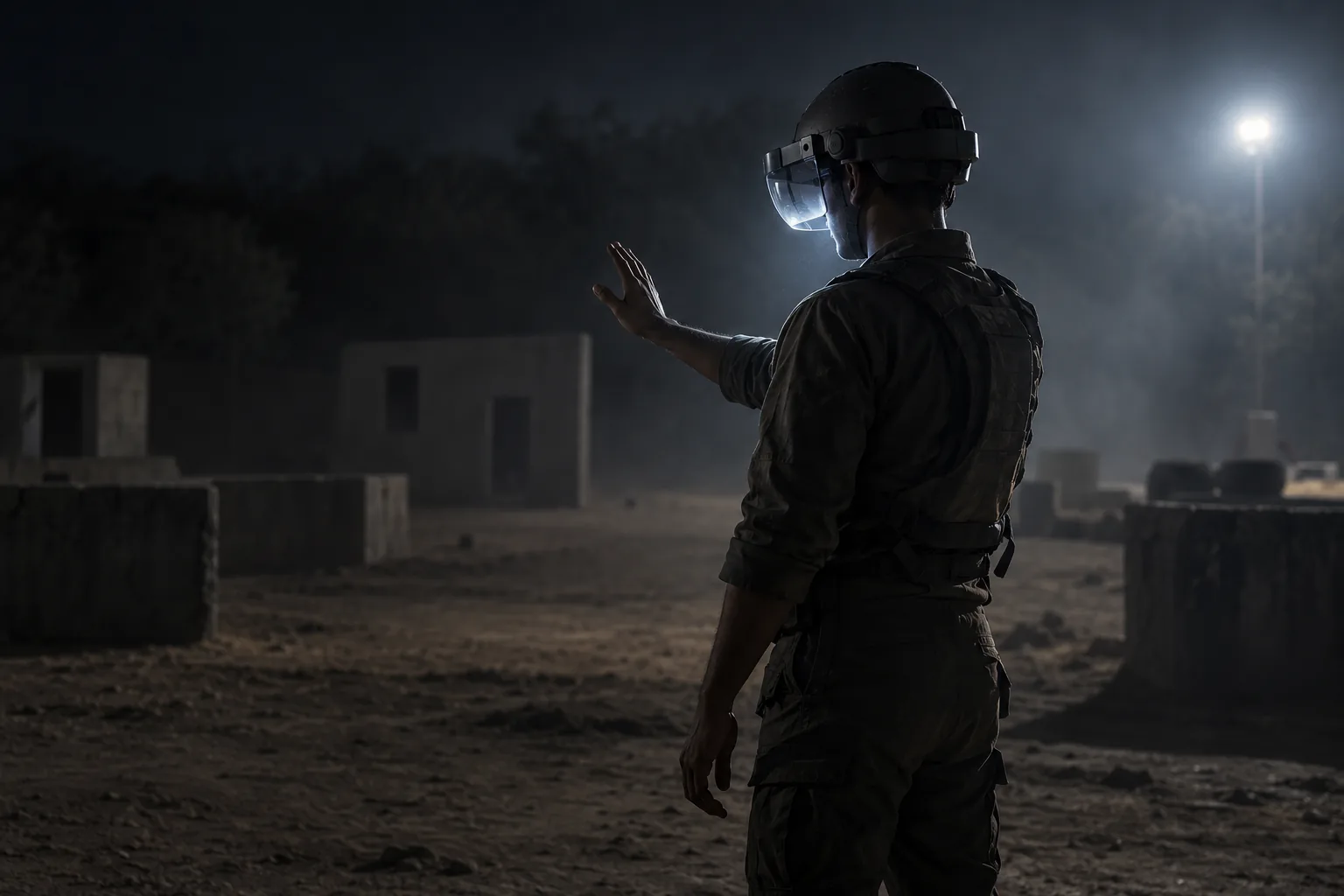
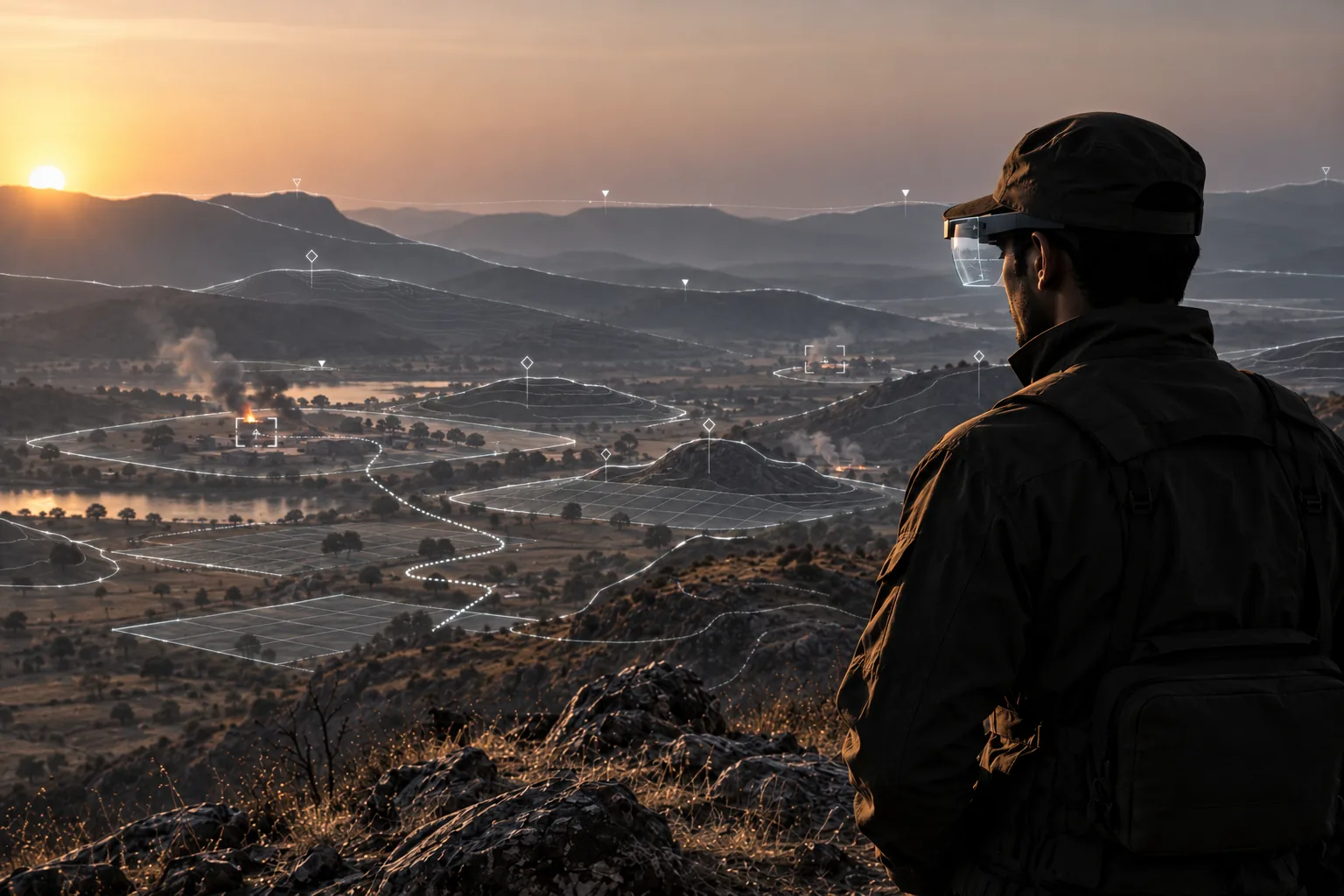
The design constraint here isn't the display technology, it's attention — a soldier's eyes need to stay on the terrain and their hands need to stay on their weapon, not on a handset. Blue-force positions, threat markers, and navigation waypoints surface in the same field of view the soldier is already using to move, without a device to pull out or a screen to check. That same no-hands constraint is why compatibility with PVS-14 and PNV-10T night vision devices matters: the HUD has to share eye space with goggles already in use, not compete with them — which is also why the mesh network and voice commands stay hands-free throughout.
MRO & sustainment
MRO & Sustainment. Keep Platforms Mission-Ready.
Some platforms can't be pulled from rotation for a training cycle or sent to a depot for a routine check — the maintenance has to happen where the platform already is, by whoever's already there. Step-by-step AR work instructions keep a technician's hands on the equipment instead of on a manual; remote expert guidance puts a depot-level specialist into that technician's field of view over live video when the fault is outside their training; digital-twin overlays surface the platform's actual service history and predictive-maintenance flags from the existing ERP/MIS system. The person doing the work sees the same maintenance record the depot would, without the platform ever leaving the line to get it.
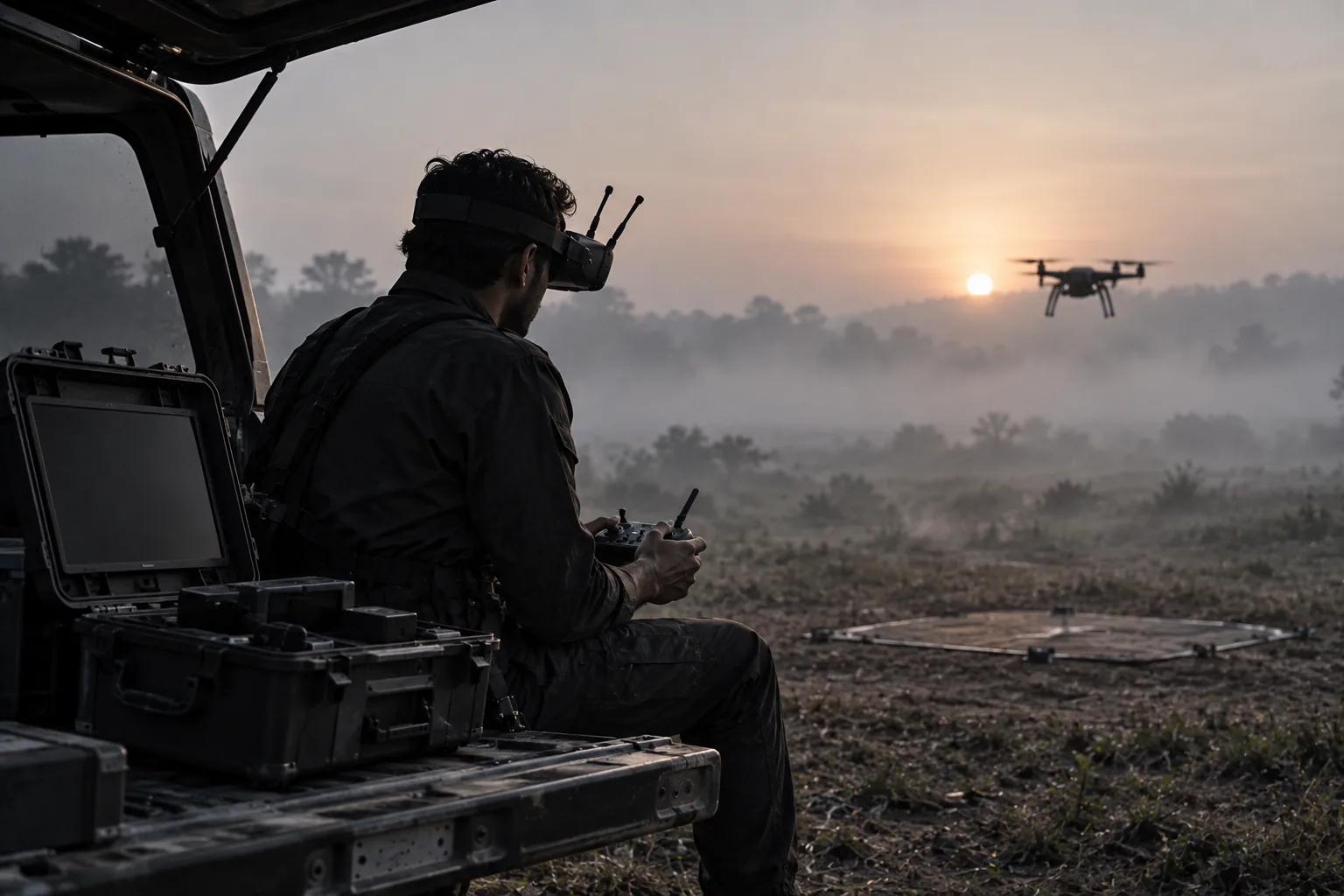
Hardware for every mission
Platforms built for the field.
The training and field-support use cases above run on the same reference platforms QWR builds for defence procurement generally. For the compliance categories, manufacturing capacity, and engagement process behind them, see Sovereign XR for the Indian Armed Forces.

QXR-06-10
Combat simulation and tactical decision training on a standalone 6DoF platform with passthrough mixed reality for mixed live/virtual rehearsal.
QAI-06
HUMBL-based platform with BMS integration and NVG compatibility under 49g.
QXR-06-07
Micro-OLED passthrough for digital twin visualisation and command wargaming.
Maritime & naval
Maritime and naval training
A ship handling simulator remains the reference for assessed harbour approach, channel transit and berthing. A maritime simulation centre keeps that bay. A maritime simulator with a full console is still where an examiner sits. Marine simulation on that floor covers the procedures the syllabus already names. Headset drills sit beside the installation, for repeat practice a booked slot cannot absorb.
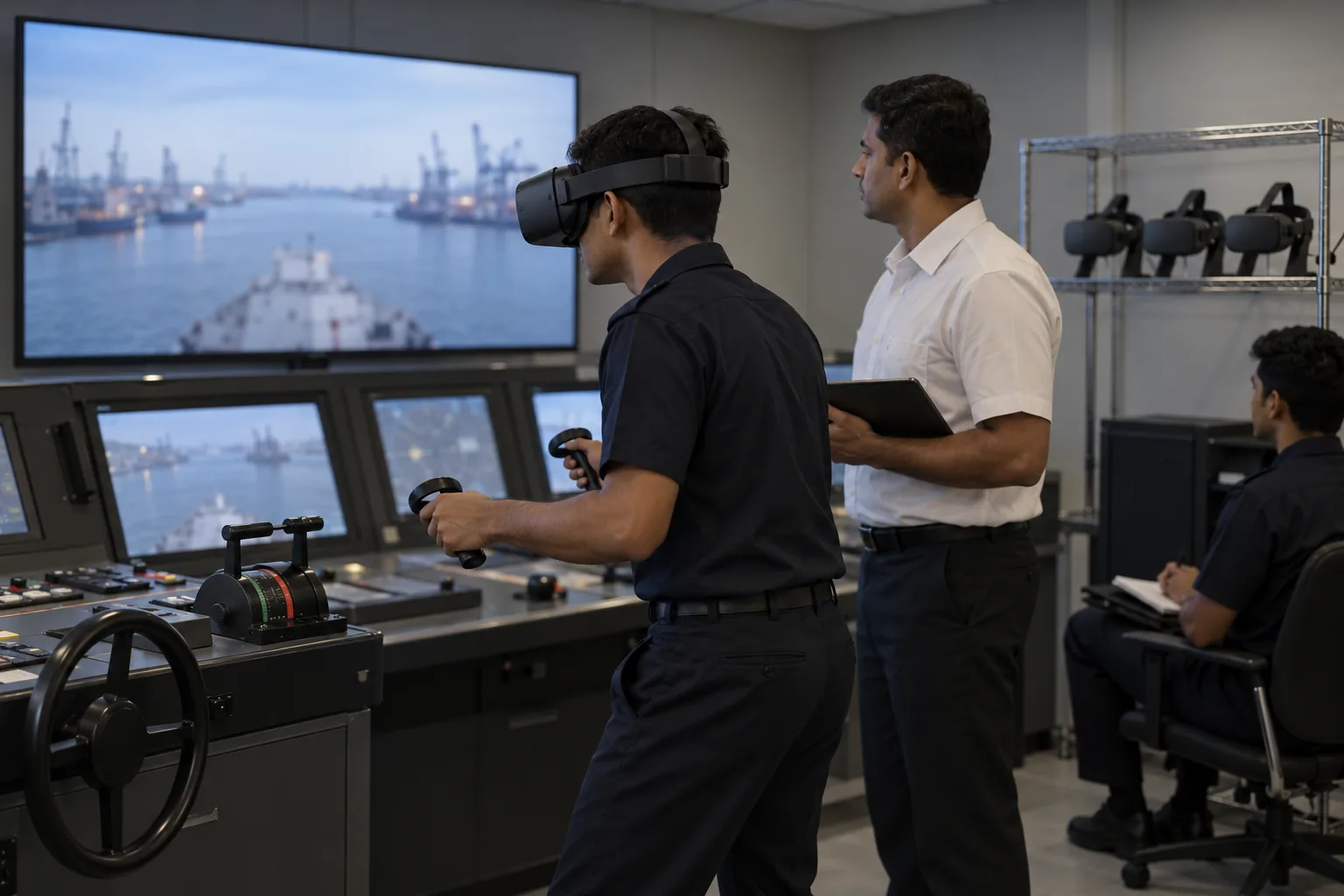
Engine room simulator course and ship bridge simulator work
An engine room simulator gives trainees time in the space before a watch. An engine room simulator course rehearses fault finding, start-up and shutdown on repeat. A ship bridge simulator session matches that format on deck, each trainee on a role, the run reset in place. GMDSS simulator practice fits the same short block.
Military VR training beside the full mission bridge simulator
Military VR training uses that split. A full mission bridge simulator stays the standard for assessed ship handling. ECDIS training can shift to a shorter session when the aim is procedure, not a scored passage. A VR ship simulator is the repeat-drill tool beside the bay: approaches, damage control and call-outs, run again without rebooking the hall. Maritime VR training and a naval training simulator programme suit academies and defence units with a fixed bay. Naval VR simulation is the portable half. Bridge resource management wants a shared picture and clear roles. A headset group can rehearse those roles. The marked assessment stays on the full console.
Is VR a substitute for a full mission bridge simulator?
No. A full mission bridge simulator remains the place for assessed ship handling, with its full console. A VR ship simulator is a repeat-drill tool beside that bay, not a replacement. Military VR training uses the same split: portable runs for procedure and team roles, while the marked assessment stays on the full installation.
Classified or unclassified.
Whether you are Army Design Bureau, DRDO, BEL, a defence PSU, or a private sector integrator, we ensure NDA-first engagement.
Further reading
- DAP, XR Procurement PolicyDefence Policy
- Negative Training in SimulationMilitary XR · Safety
- Eagle Eye, Sensor-to-Shooter LoopDefence · Soldier Systems
- Cognitive Electronic WarfareDefence · Electronic Warfare
- Army XR Training ROIDefence · Training
- International Defence Procurement Compliance (FCC/UKCA/CE)Compliance · Reference
- Specifying Rugged XR for Defence & AerospaceDefence
- Domestic-Content Clauses in Defence & PSU TendersDefence · Policy
- Hardware Requirements for Aerospace XRAerospace
- Why Mine-Site Procurement Reads Like a Defence TenderIndustry · Procurement