Design Customization
Hard Points. Soft Points. Your Vision.
Every QWR platform is engineered with fixed mechanical constraints (hard points) and open design zones (soft points). Your industrial designers work in the soft points. Our optics and thermal engineers hold the hard points. The result: a unique branded device that's certifiably manufacturable.
Engineering framework
What is fixed, what is yours.
Our Design for Manufacturing (DFM) approach defines the boundaries before your ID team opens a CAD file. No surprises at tooling stage. No optical recalibration after the enclosure changes shape.
Hard Points (Engineering Constants)
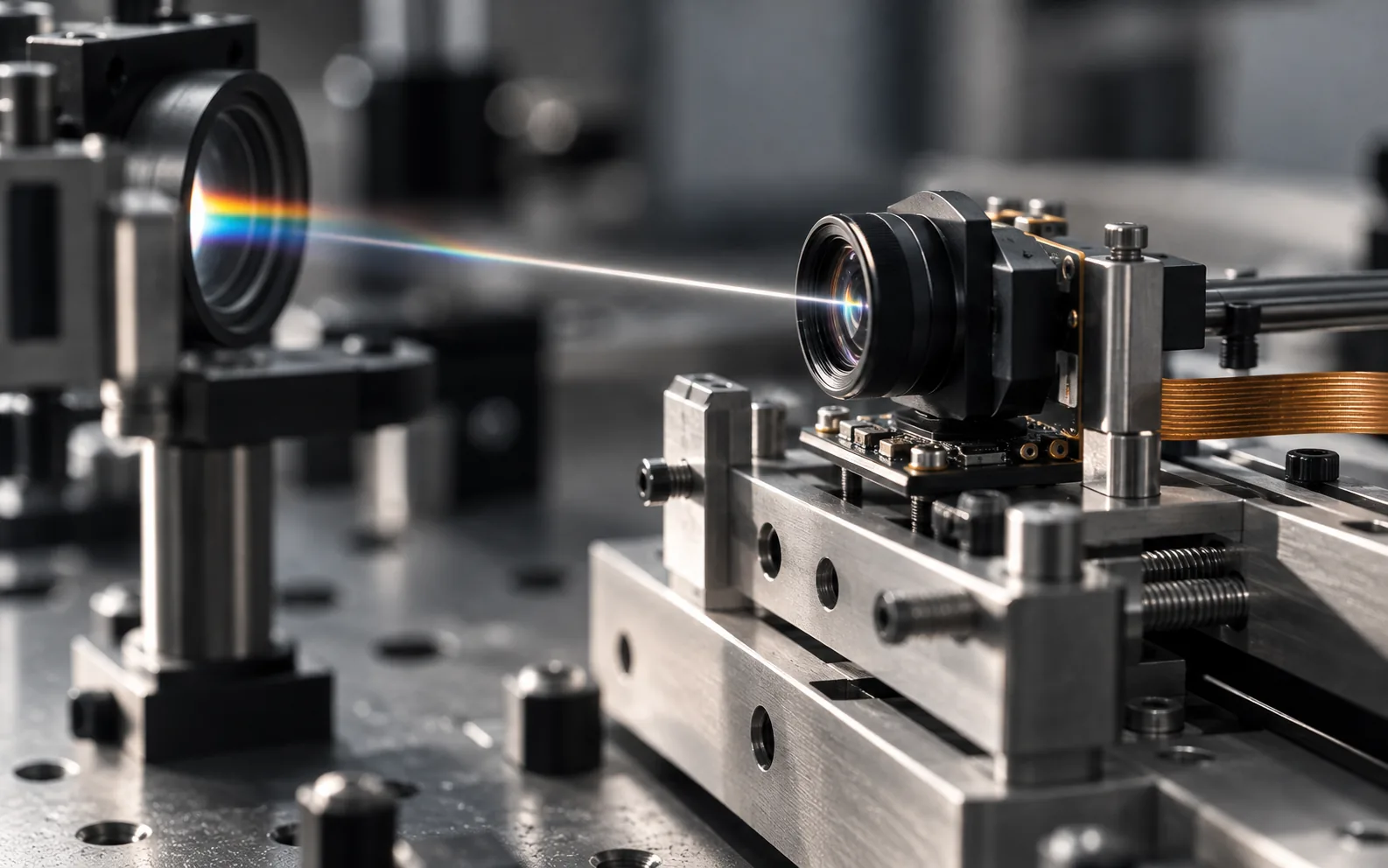
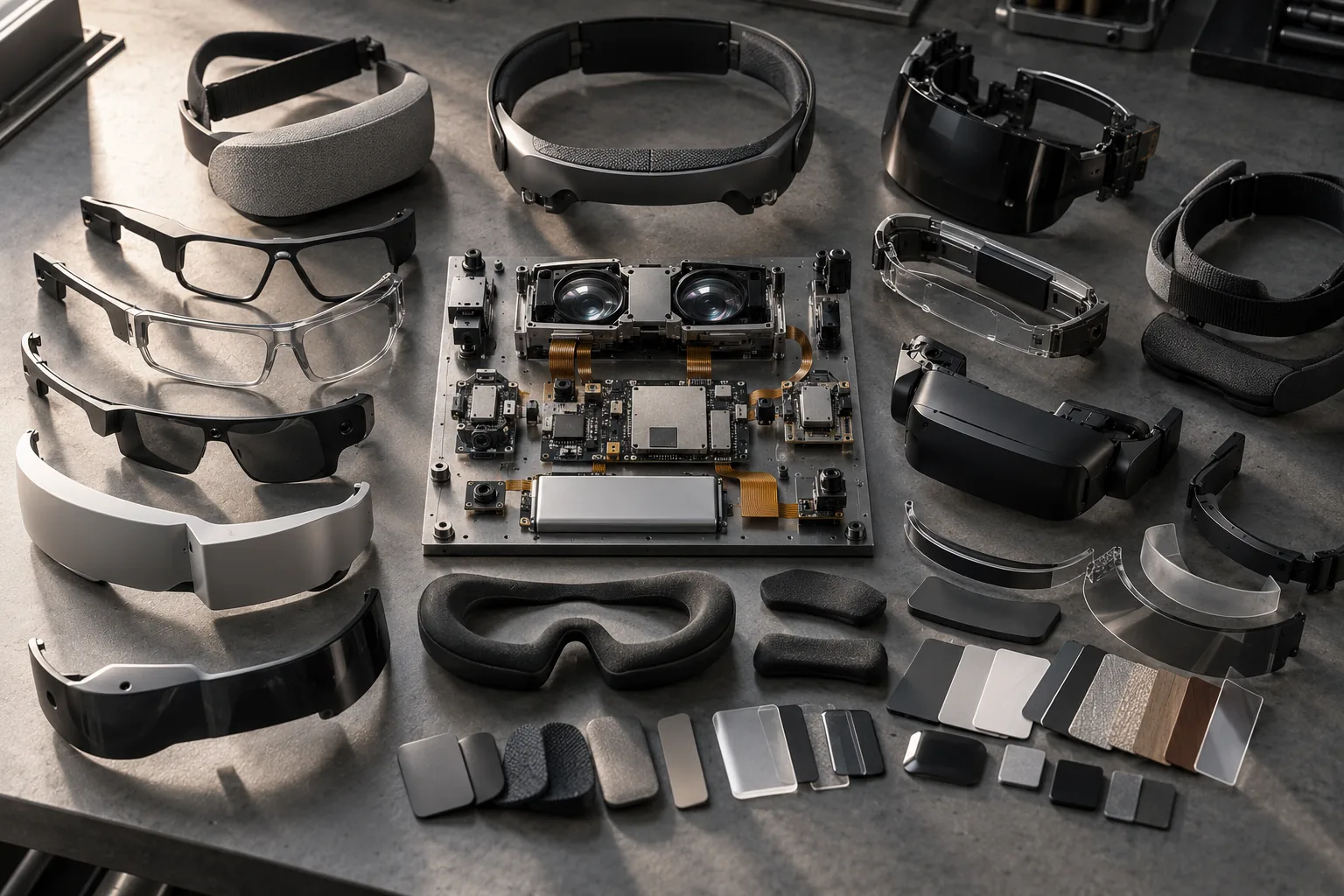
Optical stack & IPD: Waveguide mount points, lens spacing, and display module positions are fixed to sub-millimetre tolerance.
PCB & antenna footprint: Main board dimensions and antenna keep-out zones are pre-validated for BIS and FCC certification.
Thermal envelope: SoC dissipation zones must remain unobstructed.
Sensor alignment: Tracking camera angles, IR sensor positions, and depth module geometry are fixed to maintain 6DoF spatial accuracy.
Soft Points (Your Design Canvas)
Shell geometry: The external enclosure shape is fully customisable via STEP/IGES file submission.
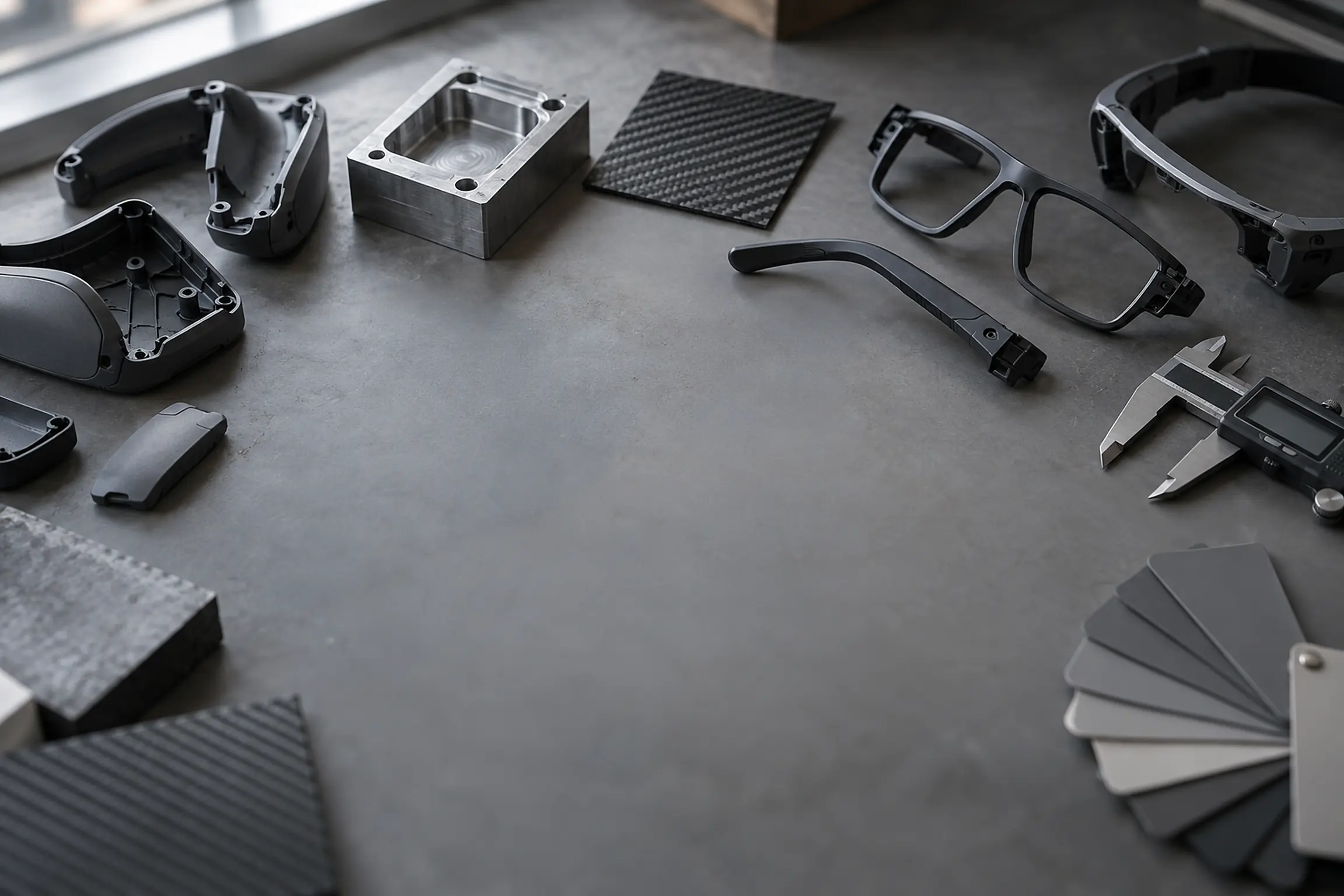
Material selection: Choose from PC/ABS, TR90, magnesium alloy, or carbon fibre.
CMF & branding: Custom Pantone colours, laser-engraved logos, specialised surface textures.
Controls & haptics: Power, volume, and action buttons can be repositioned to fit your ergonomic requirements.
Advanced materials
Materials for rugged enterprise wearables.
Select the right housing material for your deployment environment, from climate-controlled offices to industrial field sites.
PC / ABS
Primary property: Impact resistant and paintable. Cost-effective at scale.
Ideal for: High-volume education and consumer deployments.
TR90
Primary property: Ultra-flexible and hypoallergenic. Lowest weight.
Ideal for: Lightweight, all-day smart glasses OEM projects.
Magnesium Alloy
Primary property: Premium rigidity with built-in EMI shielding.
Ideal for: Defence AR HUD and high-end enterprise headsets.
Carbon Fibre
Primary property: Highest strength-to-weight ratio.
Ideal for: Flagship spatial computing and high-performance industrial.
Modular sensor integration
Vertical-specific sensor integration.
QWR platforms support the integration of secondary sensor modules for custom AR/VR OEM projects requiring specialised data inputs beyond standard XR sensing.
Thermal imaging (FLIR/LWIR)
For industrial inspection, predictive maintenance, and defence HUD visualisation. Integrated into the nasal bridge or forehead module zone.
LiDAR & structured depth
Solid-state LiDAR for high-accuracy spatial mapping, digital twin creation, and AEC as-built documentation.
Biometric monitoring
Nose-bridge or temple-integrated PPG sensors for continuous heart rate and SpO₂ tracking. Healthcare and defence fitness monitoring applications.
Environmental sensors
Gas and air quality modules (VOC, CO₂, temperature) for rugged enterprise smart glasses deployed in industrial safety roles.
DFM process
From ID file to production floor.
A structured four-stage handoff ensures your industrial design translates accurately to our Make in India production lines, with no tooling surprises.
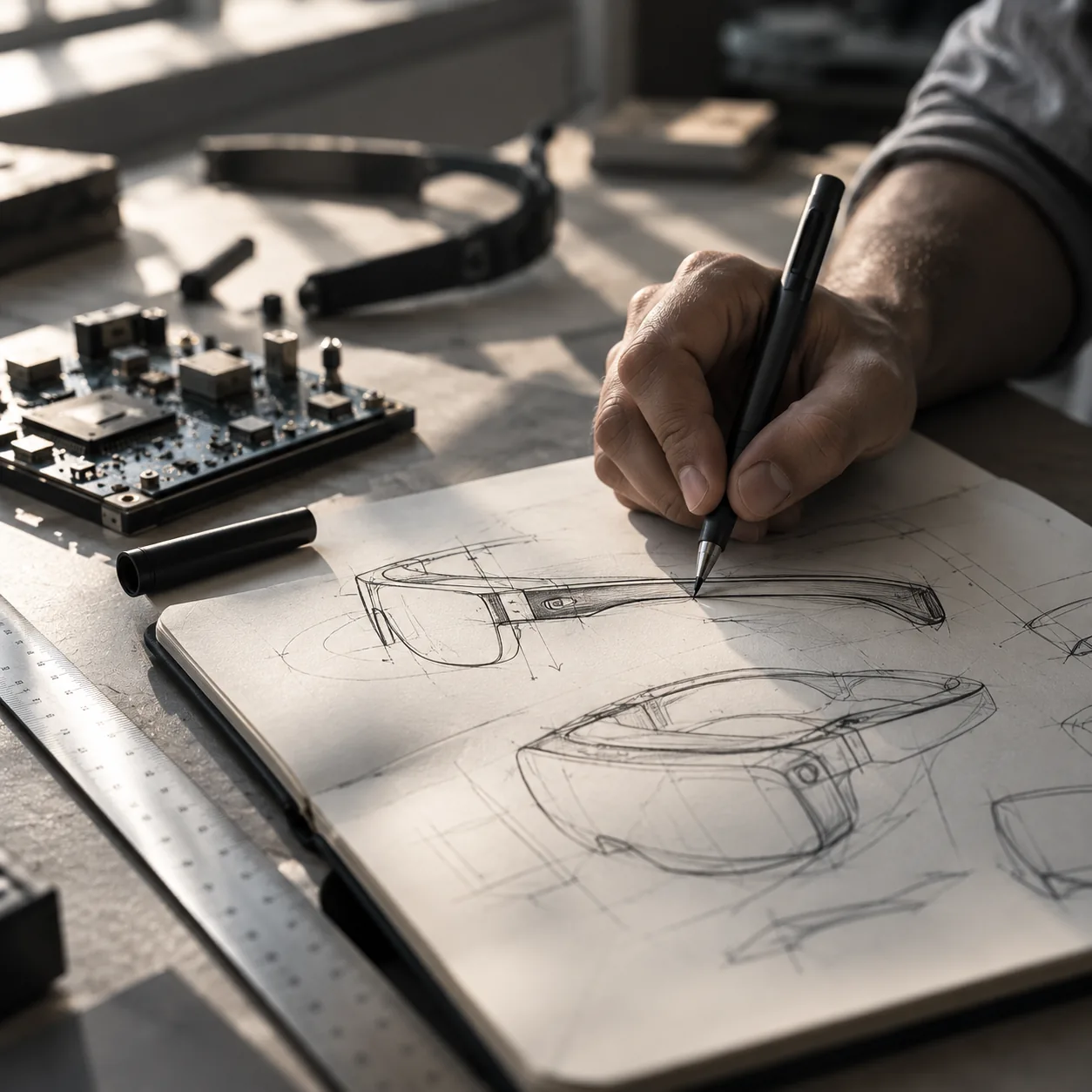
Industrial Design Review
QWR reviews your STEP files for moldability, draft angles, and thermal clearance within 5 business days. Deliverable: a marked-up DFM report.
→ DFM report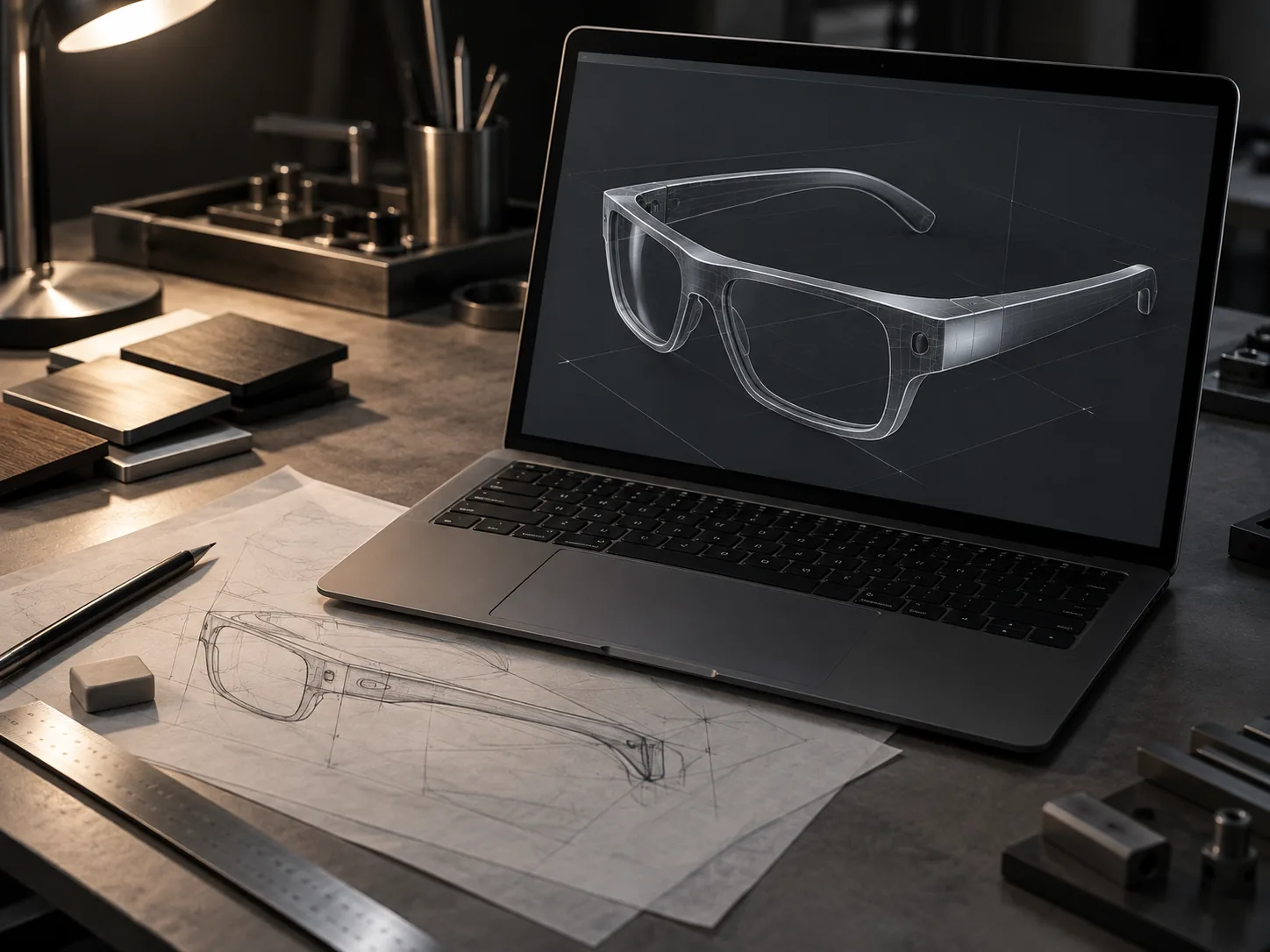
DFM Feasibility Report
Comprehensive assessment of recommended changes, risk factors, tooling cost estimates, and timeline impact. No hidden costs at this stage.
→ Feasibility assessment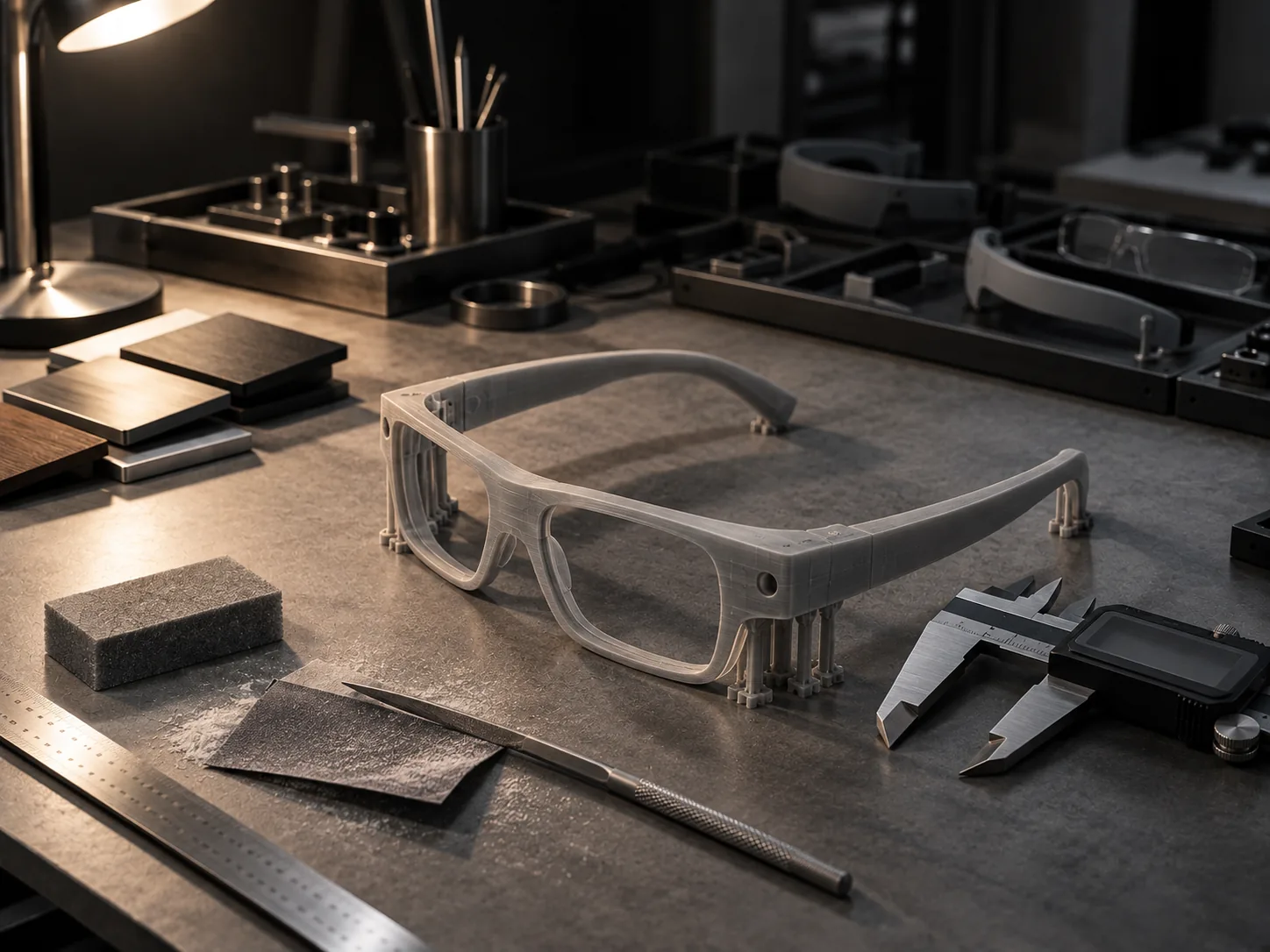
Prototype Validation
Soft tooling (CNC or 3D print) used to create 3–5 units for form, fit, and function testing. Optical calibration verified before hard tooling.
→ Validated prototype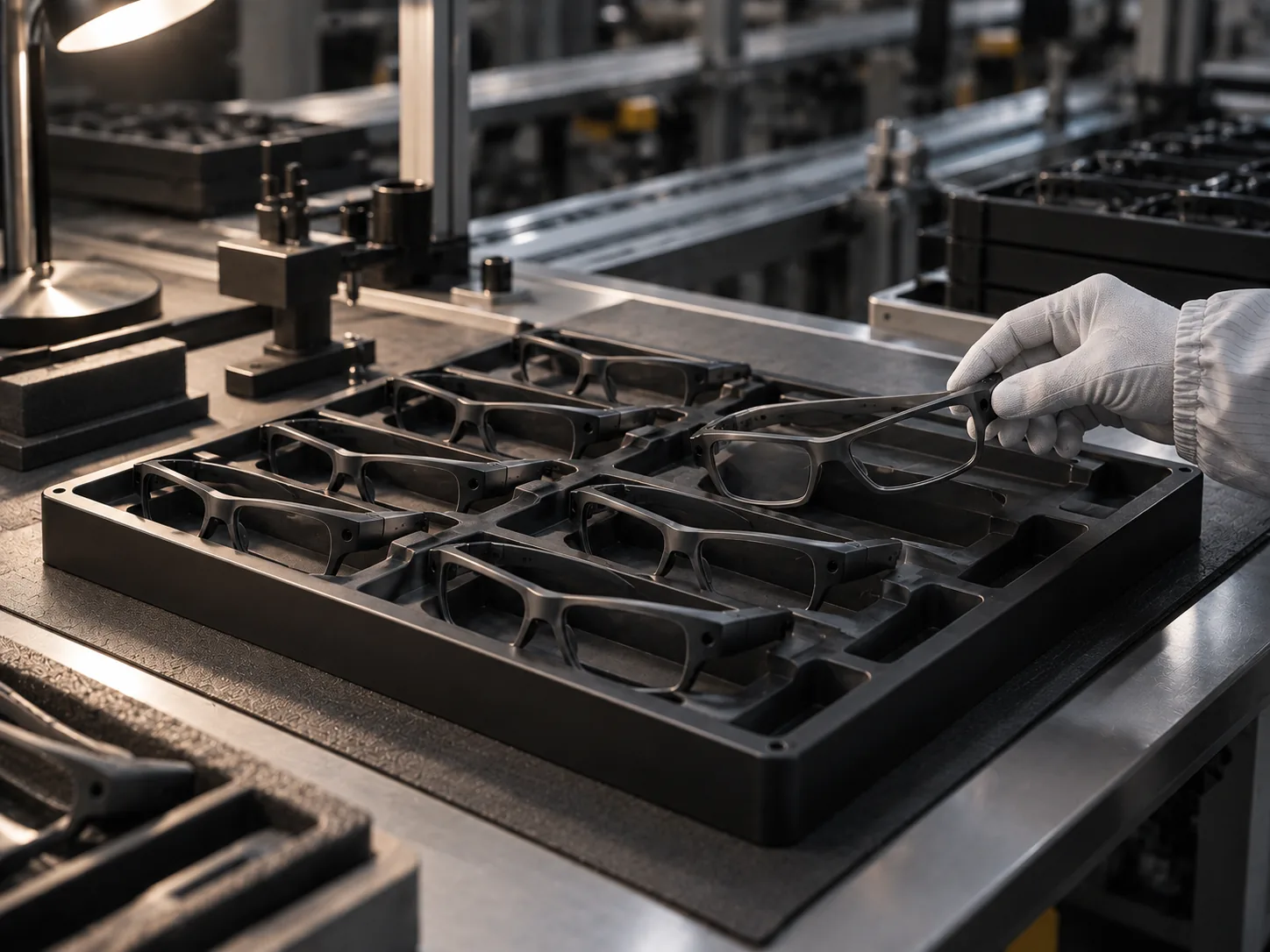
Hard Tooling & T-Iterations
Steel injection moulds with T0–T2 iterations to lock dimensional accuracy and surface finish. Production sign-off before first pilot run.
→ Production readyReady to design your spatial hardware?
Send us your ID brief or STEP files. Our engineering team will deliver a DFM feasibility assessment within 5 business days, at no charge for qualifying ODM projects.
Further reading
- Choosing an XR OEM PartnerProcurement & Strategy
- Waveguide Optics ExplainedOptics & Display
- The Battery–Weight–Thermal TrilemmaEngineering
- Modular Sensor IntegrationEngineering
- Choosing Enclosure MaterialsEngineering
- Choosing a Light Engine for See-Through AREngineering
- Crossing the Hardware Valley of DeathEngineering
- What White-Label Means Once the NDA Is SignedProcurement · Strategy
- What a Brand Controls in a Co-Brand vs ODM DealProcurement · Strategy