Industry Insights · Procurement · Strategy
Deploying an Enterprise XR Fleet? Ask These Physical Loss and Recovery Questions First.
By QWR Partner Success
A pilot of ten headsets makes a lost unit a minor annoyance. A fleet of five hundred makes it a data-security incident waiting to happen. Before you scale past a pilot, put the physical loss, theft, and recovery questions to your hardware partner directly — because the honest answer to most of them is "that’s on you," and it’s better to hear that now than after the first missing unit.
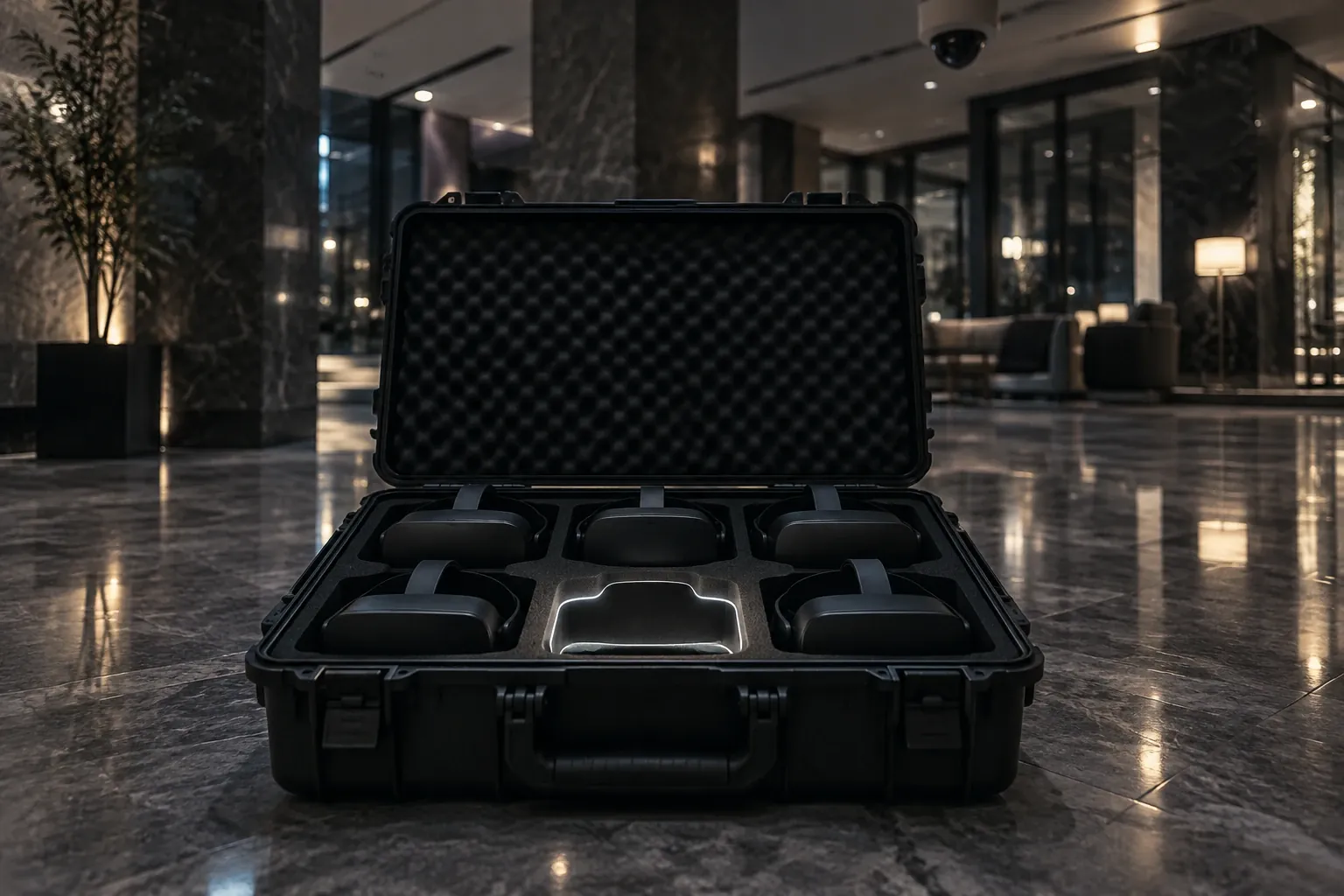
Illustrative image. These are not what our headsets look like.
Start Here: This Is a Question List, Not a Feature Comparison
This paper is deliberately built the way the export and landed-cost questions piece was: a checklist of what to ask, not a claim about what any one partner offers. It's also narrow in a specific way — this is about a missing unit, not a damaged one. Cross-border warranty and repair turnaround is its own conversation, covered in Warranty & RMA with an Overseas Manufacturer. This is what happens when a device simply isn't where it should be.
"A vendor who has a clear, specific answer to 'what happens the moment a device goes missing' has thought about your fleet at scale. A vendor who redirects to 'ask your IT team' is telling you that part of the plan is entirely yours to build."
1. "What Happens the Moment a Device Is Reported Missing?"
Ask for the actual mechanism and the actual timeline: can the platform remotely lock or wipe a specific unit, how fast does that command reach the device, and — the real edge case — what happens if the missing unit never reconnects to a network at all? A vague answer here is the most important thing you'll learn in this whole conversation, because it tells you whether device-level loss response is a built capability or something you'd have to build yourself on top of the platform.
2. "Is On-Device Data Actually Protected — Not Just the Telemetry?"
Be precise about what a "data security" answer is actually answering. QWR, for instance, states DPDP- and GDPR-compliant usage telemetry and crash reporting, resident on AWS Mumbai servers — that's a real, published commitment, but it's about aggregate fleet telemetry, not about whether session data or user content stored on a specific lost headset is encrypted at rest. Similarly, encrypted firmware delivery and ISO 27001 data residency are stated for the firmware and design-file handoff between an ODM and its partner — a different question from what's protected on a device sitting in a stranger's bag. Ask the on-device question separately; don't let a telemetry or firmware-security answer stand in for it.
3. "Can You Track, Geofence, or Locate Missing Hardware?"
Asset tracking and geofencing for lost devices typically live in a fleet-enrollment or MDM layer, not in the base hardware platform — the kind of territory covered for Android-based deployments in Android Enterprise for XR. Ask your partner directly whether that layer is available, whether it's part of the base offering or a separate integration, and who's responsible for standing it up. If the answer is "that's a third-party MDM decision," get clear on which MDM platforms are actually compatible before you assume the capability exists.
4. "How Does Replacement Actually Work — and at What Cost?"
This is different from a warranty claim: a lost or stolen unit isn't defective, it's gone, and replacing it is a purchase, not an RMA. Ask whether replacement units are held to the same terms as warranty stock — QWR's published 5-year BOM stability guarantee, for instance, means the same specification is still available years into a deployment, which matters as much for a "we need three more units, fast" replacement order as it does for a warranty swap. Also ask about turnaround: SLA-backed RMA with spares inventory and a dedicated partner engineering contact is the standard QWR publishes for post-production support generally — confirm whether a lost-unit replacement order gets the same priority as a warranty case, or sits behind it.
5. "Who Owns the Insurance and Liability Conversation?"
Ask this one plainly, because most XR hardware partners — QWR included, based on what's published — don't address device insurance or asset-protection programs at all. That's not a knock; it's simply outside the manufacturing and fleet-management scope most ODMs operate in. Confirm explicitly that insuring the fleet against loss and theft is your organization's responsibility, and factor that cost and process into your total deployment plan rather than assuming it's bundled in somewhere.
The Real Test: What Gets a Straight Answer, and What Doesn't
Expect a confident, specific answer on replacement terms and turnaround — that's core to what an ODM's post-production infrastructure is built for. Expect to do more of the legwork yourself on device-level lock/wipe, tracking, and insurance, because those questions sit at the boundary between the hardware partner and your own IT and risk functions. Neither answer is a red flag by itself. What matters is that you know, before you scale past a pilot, which parts of "what happens when a device goes missing" are handled and which parts are yours to build.
The Bottom Line: Plan for the Missing Unit Before You Have One
A five-hundred-unit fleet will eventually have a missing unit — that's a statistical certainty, not a hypothetical. Ask what happens the moment it's reported, what's actually protected on it, whether it can be located, how fast and at what cost it gets replaced, and who's carrying the insurance risk. Some of those answers will come from your hardware partner's published infrastructure; others will come back to your own IT and risk teams. Knowing which is which before you scale is the whole point of asking.
FAQ
Frequently asked questions
What is the first question to ask a hardware partner about a missing device?+
What happens the moment it is reported missing: whether the platform can remotely lock or wipe the specific unit, how fast the command reaches it, and what happens if it never reconnects to a network at all.
Does fleet telemetry security cover data on a lost headset?+
Not automatically. Telemetry and crash-reporting residency commitments are about aggregate fleet data, a separate question from whether session data or user content on a specific lost unit is encrypted at rest.
Who typically handles insurance for a lost or stolen enterprise XR device?+
The buying organization. Most XR hardware partners do not address device insurance or asset-protection programs, since it falls outside the manufacturing and fleet-management scope most ODMs operate in.
Request a Technical Briefing
Our engineering team provides direct support for procurement officers, institutional buyers, and enterprise technology leads.