Industry Insights · Procurement · Strategy
Structuring Warranty and RMA When the Factory Is an Ocean Away. Buy Time-to-Restore, Not Just Coverage.
By QWR Partner Success
For a global enterprise, the warranty clause that matters isn't the length of coverage — it's how fast a failed headset is back on a worker's face when the manufacturer is on another continent. A generous warranty with a six-week cross-border repair loop is a fleet-availability problem wearing a reassuring number. Here's how to structure warranty and RMA around the metric that actually hurts: downtime.
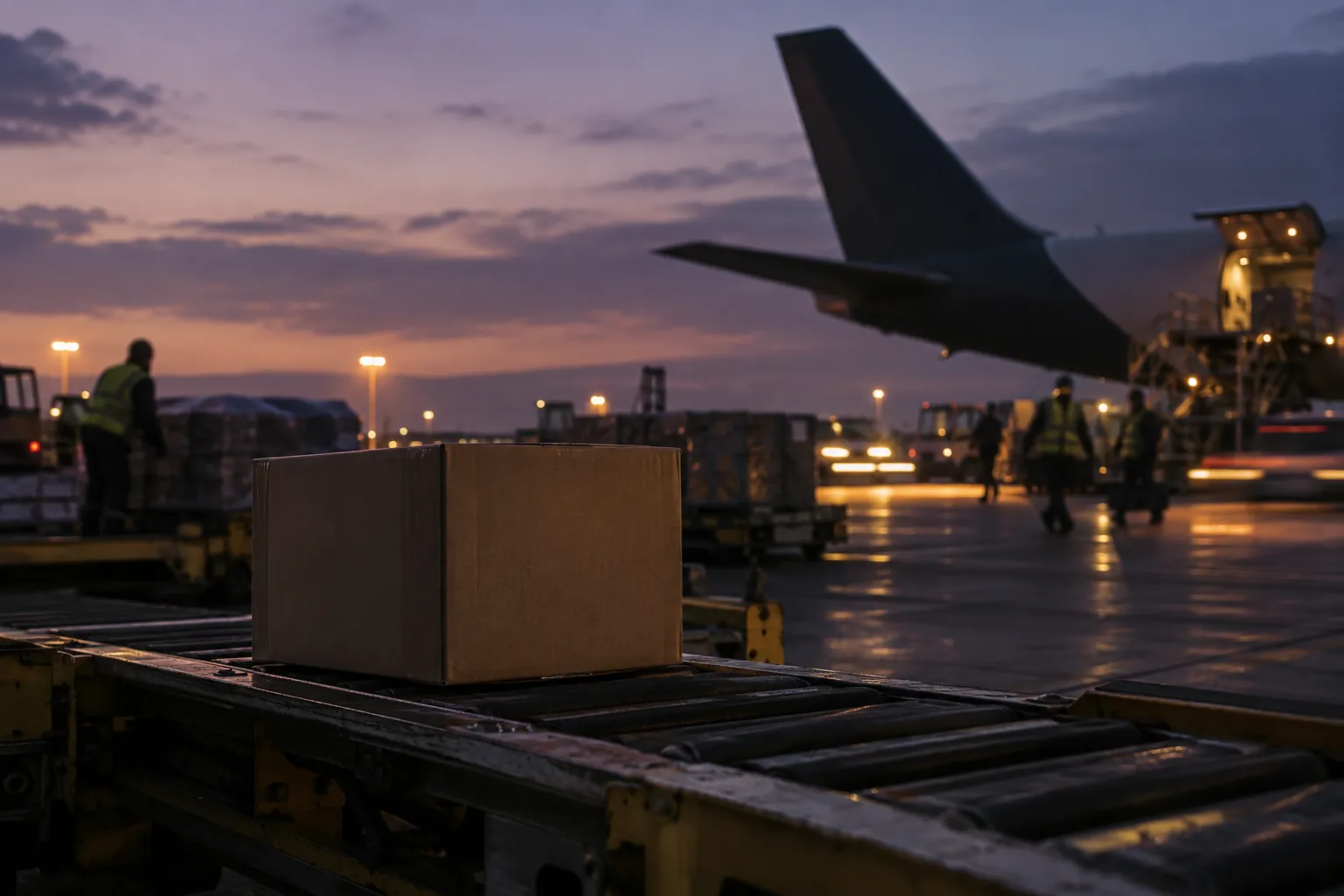
Start Here: Distance Changes the Warranty Question
Buying from an overseas manufacturer doesn't change whether devices fail — it changes what failure costs you in time. This paper is specifically about structuring warranty and RMA across that distance. The broader partner vetting is in Evaluate an XR ODM Partner, the software-support side is in Firmware & OS Update Commitments, and the shipping-and-duty mechanics are in the export and landed-cost questions. What's left — and what this covers — is keeping a deployed fleet available when the repair depot is a border and a time zone away.
"Coverage is a promise about whether a unit gets fixed. RMA structure is a promise about how long you're down while it does. For a fleet, only the second one shows up in operations."
1. Measure the Warranty in Downtime, Not Duration
- Time-to-restore is the number that matters: A dead headset in a training bay or on a line is lost productivity every day it's out. The right warranty metric is how quickly a working unit is back in service — not how many years the paper covers.
- Cross-border repair loops are brutal: QWR's own enterprise analysis makes the gap concrete — local support with 48-hour swap-outs versus the roughly four-to-six-week repair turnarounds typical when hardware has to travel back to a distant manufacturer, where a week of downtime across a fleet is a budget line of its own. When you buy from overseas, you are buying against that gap, so structure the terms to close it.
2. Keep the Fix in Your Region: Advance Replacement and Local Spares
- The way to beat distance is to not ship across it for every failure: Structure the agreement around advance (cross-ship) replacement and a spares pool stocked in your region, so a failed unit is swapped immediately and the dead one is dealt with separately — rather than a worker waiting weeks for a round trip.
- Make spares provisioning an explicit term: QWR's post-production support includes a spares inventory as part of SLA-backed RMA; the buyer's job is to negotiate where that inventory sits and how fast it reaches your sites. Regional stocking is a term you ask for, not something to assume from a factory on another continent.
- Size the spares pool to the fleet and the distance: the farther the manufacturer and the larger the fleet, the deeper the local buffer needs to be. Agree the ratio up front.
3. Put RMA on an SLA — With a Human Behind It
- "Warranty" without a service-level agreement is just a hope: Define response time, replacement/turnaround time, and an escalation path in writing. QWR frames its RMA as SLA-backed, with dedicated partner engineering contacts — explicitly "not a ticket queue" — which is the model to hold any overseas partner to.
- A named contact beats a portal across a time zone: when a fleet is down, a dedicated engineer who knows your deployment resolves it faster than a queue in a distant support centre. Insist on the human, and on the SLA that governs their response.
4. Repairability Has a Shelf Life: the Component-Supply Floor
- You can't RMA a unit whose parts no longer exist: A warranty is only honourable as long as the components to repair or replace are still available. QWR's 5-year BOM stability guarantee — a component-supply commitment that prevents a forced mid-cycle redesign — is the floor beneath any multi-year RMA promise.
- Match warranty duration to the supply guarantee and the deployment: a warranty that outlasts the component supply is a claim that can't be met. Line the two up, and line both up with how long the fleet will actually run.
5. Cut the RMA You Never Needed: Fix Faults Before They Ship Back
- Most "hardware" failures aren't: A large share of field issues are software or configuration faults that an over-the-air update resolves without any unit moving. QWR's OTA infrastructure — delta patches with automatic rollback, run as zero-downtime fleet management — is what keeps a software bug from becoming a cross-border RMA.
- Health analytics turn reactive RMA into proactive maintenance: fleet telemetry that surfaces failing units early lets you act before a device dies in the field. The best cross-border RMA is the shipment you avoided by fixing the issue remotely.
The Checklist to Put in the Contract
Before you sign with an overseas manufacturer: a warranty stated in time-to-restore, not just years; advance/cross-ship replacement backed by a spares pool stocked in your region, with an agreed depth; an SLA with defined response, turnaround, and escalation, and a named engineering contact rather than a ticket queue; a warranty duration matched to a component-supply guarantee (QWR publishes a 5-year BOM); OTA and fleet-health capability to resolve software faults without a physical return; and explicit terms on who bears return freight, duties, and DOA handling across the border. Each is a lever that converts distance from a liability into a managed variable.
The Strategic Conclusion: Availability Is the Real Warranty
When the factory is an ocean away, a warranty measured only in years of coverage quietly transfers the cost of distance onto your operations. The warranty that protects a global fleet is structured around availability: replacement that happens in-region, an SLA with a human attached, a component-supply floor that keeps repairs possible, and a software update path that prevents most returns entirely. QWR publishes its lifecycle and RMA infrastructure so those terms can be negotiated as commitments, not assumed as goodwill. Buy the time-to-restore — the coverage length is just the fine print around it.
FAQ
Frequently asked questions
What is the right way to measure a warranty on overseas-manufactured hardware?+
By time-to-restore, not years of coverage. A generous warranty with a six-week cross-border repair loop is a fleet-availability problem, not a benefit.
How does QWR handle fleet repairs without shipping overseas?+
Through advance, cross-ship, replacement and a regional spares pool, so a failed unit is swapped immediately rather than the worker waiting weeks for a round trip.
What should be written into an RMA SLA?+
Defined response time, replacement and turnaround time, and an escalation path, plus a dedicated engineering contact rather than a ticket queue.
Request a Technical Briefing
Our engineering team provides direct support for procurement officers, institutional buyers, and enterprise technology leads.