Industry Insights · Healthcare · Training
What Clinical Training Actually Demands of XR Hardware. A Requirements Read for Hospital Administrators and Medical Education Buyers.
By QWR Technical Marketing
10x more practice hours, 40% lower training cost, 35% less opioid use in patient recovery — the outcome numbers for clinical XR training are well established. What’s less discussed is that those numbers depend on hardware chosen for four genuinely different clinical use cases, each of which asks something different of the device. Surgical simulation and patient rehabilitation are not the same hardware brief, even when they run on the same headset family.
Start Here: This Is About the Hardware, Not the Compliance Case
The DPDP compliance mechanics behind a healthcare-grade XR platform are covered in depth in DPDP Act & Patient Data Privacy; this paper sits upstream of that, on the hardware requirements that make the training outcomes reachable in the first place. Worth being precise about scope, too: this is a training and simulation platform, not a diagnostic or life-support device — the requirements below are about tracking fidelity, display clarity, and workflow fit for rehearsal and education, not a claim about medical-device certification. And where surgical simulation raises questions about tracking latency and how it shapes the muscle memory a trainee actually carries into the operating room, that argument is made in full in Negative Training & Surgical Simulation — the same paper this platform's own further-reading points to.
"A surgical simulator and a rehabilitation tool are both 'clinical XR' — and they need almost opposite things from the tracking system."
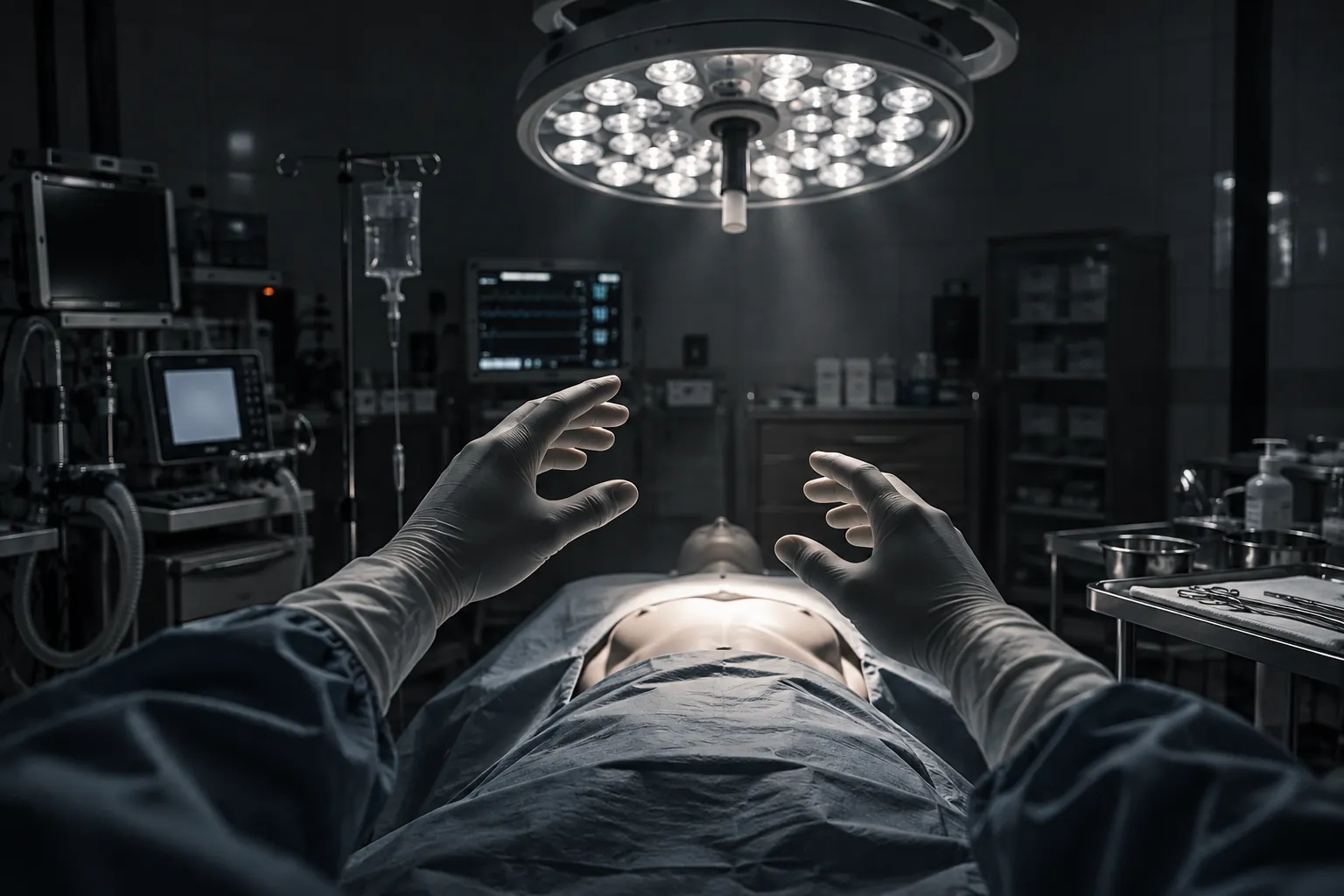
1. Surgical Simulation Demands Haptic Integration and Motion-Capture Precision
- Haptic fidelity is a peripheral-integration requirement: Practicing laparoscopic, orthopedic, and dental procedures depends on licensable OEM haptic feedback — that's a hardware and integration commitment at the ODM level, not a display spec, and it has to be designed in rather than bolted on.
- Competency analytics needs tracking accurate enough to score, not just record: Objectively scoring every incision and movement to track time-to-competency requires motion capture precise enough to distinguish a clean technique from a flawed one. The deeper argument for why that precision threshold matters — and what happens when it isn't met — is covered in Negative Training & Surgical Simulation.
- Rehearsal only pays off if it's the technique worth keeping: Mastering intricate surgical steps risk-free before the OR is only valuable if the tracked environment is stable and precise enough that what's rehearsed is what should actually happen in the room. Sub-millimeter tracking is the floor for that, not a premium add-on.
2. Medical Education Demands Display Fidelity Fine Enough to Survive Rotation and Annotation
- Digital cadavers live or die on pixel density: Sectioning, rotating, and annotating musculoskeletal and respiratory systems with real-time pathology data means a fine anatomical boundary — a vessel wall, a tissue plane — has to hold up under rotation, not blur into a display artifact. This is where QXR-06-07's clarity is doing real work for this vertical specifically, not just a spec-sheet number.
- Universal access is a deployability requirement: Extending this infrastructure to institutions where physical cadaver programs are logistically constrained means the hardware and content have to deploy reliably outside a flagship teaching hospital's IT environment, not just inside one.
- Multilingual instruction is a content requirement worth scoping early: Regional-language interface support isn't a hardware spec, but it belongs on the same procurement checklist since it shapes which devices and content pipelines are viable for a given institution.
3. Patient Rehabilitation Demands Tracking Tuned for Impaired Movement, Not Peak Precision
- Comfort is the first requirement, not an afterthought: Pain and PTSD management — the platform's cited 35% reduction in opioid use comes via immersive distraction and exposure therapy — depends on sustained, repeated sessions over a course of treatment, which puts wearing comfort ahead of raw fidelity.
- This is the opposite tracking problem from surgical simulation: Neuro-rehabilitation uses gamified motor exercises with 6DoF tracking for stroke and geriatric recovery, and that tracking has to be forgiving of limited or asymmetric movement — tuned to register and reward small gains, not to penalize imprecision the way a surgical trainer must.
- Cognitive stimulation is a safety requirement, not a specs one: Mental health therapy and geriatric cognitive health work depend on a controlled, low-startle environment more than any particular resolution or refresh-rate number.
4. Clinical Workflow Demands Sterile-Field-Compatible, Hands-Free Operation
- Surgical HUD is a different optical architecture entirely: Overlaying live MRI or CT imaging onto the surgical field requires see-through AR optics with precise registration — not the passthrough VR used for simulation and rehab. Buyers evaluating this use case are effectively evaluating a different product category, and the underlying optics tradeoffs are covered in How AR Displays Work.
- Specialist consultation is a connectivity requirement: Connecting urban specialists to rural hospital theaters via live video and spatial pointers depends on reliable networked video more than any display spec.
- Ward rounds set the strictest bar in this vertical: Accessing patient records and vitals hands-free "without breaking the sterile field" means the device must be fully operable by voice or gaze alone, and its form factor has to be one a clinician is actually willing to wear into a sterile environment. That's a stricter, more specific bar than "hands-free" means on a factory floor or a warehouse aisle.
Matching Device Class to Clinical Use Case
QWR's own hardware split for this vertical makes the point directly: QXR-06-07 — sub-millimeter tracking — is positioned for surgical training ODM projects and the high-fidelity simulation and anatomy work that demands it. QAR-06 is positioned as the lightweight assistant for ward rounds, nursing staff, and remote clinical guidance — an always-available hands-free tool rather than a scheduled simulation session. The mistake is assuming one clinical XR device serves surgery, rehab, and ward workflow equally; the discipline is recognizing that a rehabilitation tool and a surgical trainer want nearly opposite things from the same tracking stack.
The Clinical Training Hardware Checklist
Before specifying a clinical XR deployment, confirm: haptic peripheral integration and motion-capture precision tuned for procedural muscle memory in surgical simulation; display fidelity fine enough to hold anatomical detail under rotation and annotation; tracking tuned for the opposite job in rehabilitation — forgiving of impaired movement rather than demanding precision; see-through AR optics with clinical-grade registration for HUD overlays; and fully hands-free, sterile-field-compatible operation for ward rounds. One clinical umbrella, five distinct hardware jobs.
The Conclusion: Specify for the Clinical Task, Not the Category
"Clinical training" reads like a single procurement category, but it is at least five different jobs for the hardware: precision tracking for surgery, display fidelity for anatomy, forgiving tracking for rehabilitation, dedicated optics for HUD overlays, and hands-free operation for ward workflow. The outcome numbers — more practice hours, lower training cost, less reliance on opioids in recovery — are real, but they're earned by matching the device to the specific clinical task, not by treating "clinical XR" as one line item.
FAQ
Frequently asked questions
What tracking precision does surgical simulation require?+
Sub-millimetre motion-capture precision, accurate enough to objectively score every incision and movement and distinguish clean technique from a flawed one.
Does rehabilitation training need the same tracking precision as surgical simulation?+
No, the opposite. Neuro-rehabilitation tracking needs to be forgiving of limited or asymmetric movement, tuned to register and reward small gains rather than penalise imprecision the way a surgical trainer must.
Which QWR hardware is positioned for surgical training versus ward rounds?+
QXR-06-07, with sub-millimetre tracking, is positioned for surgical training ODM projects and high-fidelity anatomy work. QAR-06 is positioned as the lightweight, hands-free assistant for ward rounds and remote clinical guidance.
Request a Technical Briefing
Our engineering team provides direct support for procurement officers, institutional buyers, and enterprise technology leads.