Industry Insights · Healthcare · AI
AI-Powered Retinal Triage. Democratising Healthcare in Rural India.
By QWR Technical Marketing
As of April 2026, India has effectively neutralised the 'specialist bottleneck' by deploying AI-at-the-Edge across its rural heartlands. MadhuNetrAI and DeepCXR turn every community health worker into a specialist-augmented node.
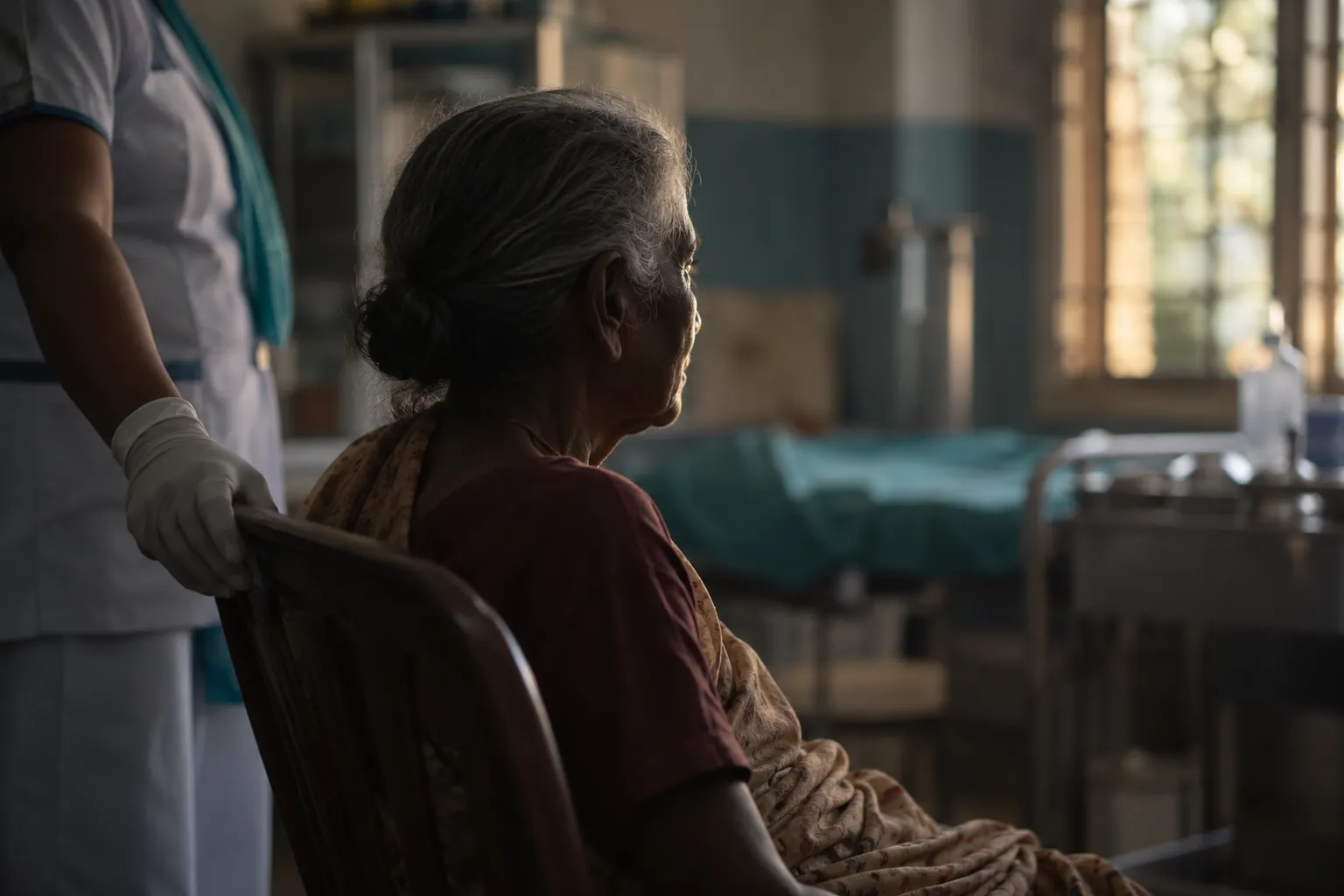
Neutralising the Specialist Bottleneck
As of April 2026, India has effectively neutralised the specialist bottleneck by deploying AI-at-the-Edge across its rural heartlands. While urban centres have historically monopolised medical expertise, the Viksit Bharat healthcare roadmap has pivoted toward a decentralised, AI-first diagnostic model. By integrating AI into wearable smart glasses and portable screening tools, the Indian healthcare ecosystem is ensuring that geography no longer dictates medical destiny.
"By allowing a local worker to see through the eyes of a specialist, India is ensuring that its 1.4 billion citizens receive world-class care regardless of coordinates."
1. The Rural Healthcare Paradox: Smarter Data, Fewer Hands
Field healthcare in India is grappling with a significant workforce skills gap. While manufacturing faces a shortage of 2 million workers, the healthcare sector faces a more acute crisis: a lack of specialised ophthalmologists and radiologists in Tier-3 towns.
- The diagnostic lag: Without AI, a retinal scan for diabetic retinopathy can wait weeks for specialist review, leading to preventable vision loss.
- The economic drain: A company's poorest-performing employees cost 67% more than their highest performers — in healthcare, this performance gap results in delayed interventions and skyrocketing service costs.
2. MadhuNetrAI: The Retinal Revolution
The MadhuNetrAI initiative, a cornerstone of the 2026 IndiaAI Mission, leverages wearable AR and AI to bring specialist-level screening to the patient's doorstep.
- Retinal screening at the tactical edge: Using AI-integrated smart glasses, a local health worker can perform a fundus examination with 98% accuracy in detecting anomalies.
- Direct retinal feedback: AR enables the worker to view a digital screen within their immediate field of vision — highlighting micro-aneurysms or hemorrhages hands-free.
- Intelligent triage analytics: The AI reviews historical scans to spot trends, instantly categorising patients into Normal, Monitor, or Urgent Referral groups.
- See-what-I-see: If an anomaly is detected, the on-site worker connects with a remote expert who views exactly what the technician sees and walks them through the needed steps.
3. DeepCXR and the Automation of Respiratory Health
Beyond vision, the 2026 healthcare mandate has scaled DeepCXR — AI-based automated Chest X-ray interpretation. This is vital in India's fight against tuberculosis and respiratory ailments.
- Rapid time-to-proficiency: AI deployment in field health operations decreases the learning gap between new hires and senior-level doctors.
- Automated diagnosis: DeepCXR detects problems in lung scans with machine precision, ensuring middle-of-the-pack health workers perform at the level of the top 20%.
- Cost containment: Resolving problems on-site without patient transfer reduces "truck rolls" (patient dispatches), decreasing service costs by up to 92% more than non-AI users.
4. The Economic Case for AI Democratisation
Strategic investments in AI and AR wearables result in long-term gains across all healthcare KPIs. Labour costs have risen 8% since 2021, but technology is something leaders can control.
- Workforce scaling: AI gives a small team the ability to be in multiple places at once, vastly extending the reach of rural clinics.
- Voluntary turnover reduction: 68% of companies using AR see a decrease in annual voluntary turnover due to better training and immersive support.
5. The Healthcare Metaverse: Digital Twins in Medicine
- Heads-up learning: Community health workers review complex procedures through a screen within their immediate field of vision, keeping hands free to work.
- Predictive triage integration: IoT-enabled sensors are shifting the model from reactive to proactive — addressing biological problems before they cause a systemic "shutdown."
Strategic Conclusion: The New Standard of Care
By April 2026, AI and AR have become the standard by which patients evaluate and measure healthcare performance. Organisations that do not move now to make these investments will not be around in five years due to the rapidly increasing cost of service. The future of Indian healthcare is heads-up, hands-free, and AI-driven.
Request a Technical Briefing
Our team provides direct support for procurement officers, institutional buyers, and enterprise technology leads.