Industry Insights · Policy · Regulation
E-Waste and Circular Design Criteria for XR Hardware Procurement. What EPR and WEEE Actually Obligate You To Do.
By QWR Compliance & Regulatory Affairs
"RoHS and WEEE compliant" reads like a checkbox on a spec sheet. In practice it’s a set of registration deadlines, recycler appointments, and per-country paperwork that lands on someone — the manufacturer or, in business-to-business sales, the buyer. Before treating environmental compliance as a solved problem, here’s what it actually requires.
Start Here: This Goes Deeper Than the Certification Badge
The XR Certification Map covers RoHS, WEEE, ISO 14001, and EPR as one layer in a broader certification matrix — accurately, but at a glance. This paper is the deeper read on that one layer specifically: what an EPR registration actually requires you to do, market by market, and what "circular design" means at the level of an engineering drawing rather than a badge on a page.
"A RoHS badge tells you a substance list was cleared. It doesn't tell you who's registered as the producer, who appointed the recycler, or whether the enclosure can actually be taken apart when it gets there."
1. EPR Is a Registration and Reporting Obligation, Not a Logo
- India's E-Waste Rules create real, dated obligations: Under India's E-Waste (Management) Rules 2022, producers and importers must register with the Central Pollution Control Board, with Extended Producer Responsibility targets applying from Year 1. That means appointing an authorised recycler or dismantler and filing an annual compliance report to the CPCB — not a one-time form.
- The deadline is before you sell, not before you're audited: EPR/CPCB registration is a required step before first sale, alongside BIS and WPC approvals — it belongs on the same pre-launch timeline as safety certification, not treated as a follow-up task.
- Disposal labeling is a physical requirement on the unit itself: Indian market units must carry e-waste disposal instructions in English and Hindi — a labeling obligation as concrete as a BIS mark, easy to miss if environmental compliance is treated as paperwork rather than a manufacturing spec.
2. WEEE Registration Is Market-by-Market, Not One-and-Done
- There is no single EU-wide WEEE registration: Under the EU WEEE Directive, a producer must register separately in each EU member state where it sells — country by country, with the crossed-out-wheelie-bin symbol and production year mandatory on every unit. Treating "WEEE compliant" as a single global status is a mistake that shows up the moment you add a second EU country.
- UK WEEE is its own separate registration, with a detail worth flagging for institutional buyers: UK producers must register with an approved producer compliance scheme and file annual reporting — and take-back obligations specifically apply to business-to-business sales. For the schools, hospitals, and enterprises this project has been written for, that means an institutional buyer can be part of the compliance chain, not just a passive purchaser.
- This belongs on the pre-launch checklist, not the post-launch one: confirming WEEE/EPR registration is active in every target market before first commercial sale is exactly the kind of gating item that's easy to assume is handled and expensive to discover isn't.
3. Substance Restrictions Are a Bill-of-Materials Discipline
- RoHS 3 names ten specific substances, not a vague "hazardous materials" standard: lead, mercury, cadmium, hexavalent chromium, PBB, PBDE, and four phthalates (DEHP, BBP, DBP, DIBP) are restricted by name, with compliance required across the full bill of materials and REACH SVHC declarations expected from material suppliers.
- The restriction is enforced at component selection, not at final test: hexavalent chromium, cadmium, lead outside RoHS-exempted solder, mercury, PBB, and PBDE are stated as strictly prohibited before a component is even chosen — a design-stage discipline, not a substance scan run after the product is built.
- "RoHS-compliant" doesn't automatically clear every market's disclosure rule: Japan's J-Moss Green Mark and Korea's K-RoHS layer their own disclosure requirements on top of the same substance list — a reminder to confirm the specific disclosure mechanism your target market actually requires, not just the underlying chemistry.
4. Fastening Choices Decide Whether "Recyclable" Is Actually Achievable
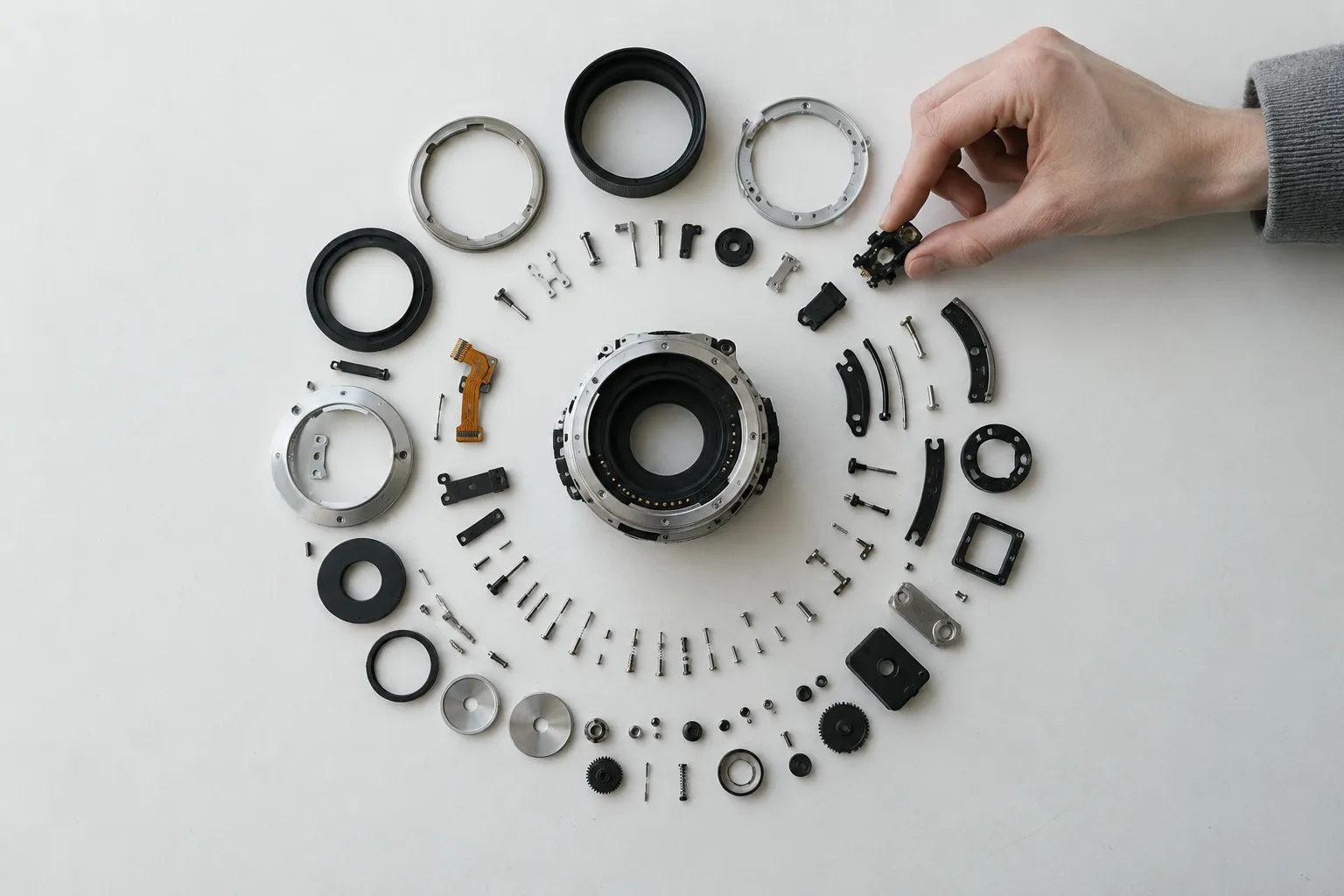
- A bonded enclosure defeats the point of an authorised recycler: a device that's glued shut can't be economically disassembled downstream, no matter how clean its compliance paperwork is. The approved assembly methods for QWR-manufactured hardware are metric mechanical fasteners — socket-head cap screws, self-tapping fasteners for plastic bosses, and heat-set inserts sized for thermoplastic boss reuse — with adhesive-only structural joints explicitly not permitted.
- That's a genuine circular-design lever, worth asking about directly: whether an enclosure is held together with reversible fasteners or bonded shut determines whether the recycler your EPR registration requires you to appoint can actually separate materials, or is stuck shredding a sealed unit whole.
The Circular Compliance Checklist
Before treating e-waste compliance as handled, confirm: EPR/producer registration is active in every market you sell into, with an appointed authorised recycler and a reporting cadence, done before first sale, not after; WEEE registration is confirmed country by country in every market, not assumed as one global status, with take-back obligations checked specifically if you're an institutional B2B buyer; the full BOM carries RoHS 3 and REACH SVHC documentation, with market-specific disclosure marks (J-Moss, K-RoHS) checked separately; and the enclosure itself is assembled with reversible mechanical fasteners rather than bonded shut. Four checks, and "environmentally compliant" becomes a fact you can verify rather than a badge you take on trust.
The Conclusion: Compliance Is an Operating Discipline, Not a Certificate
RoHS and WEEE badges on a certification page are the summary, not the substance. The substance is a set of registration deadlines that fall due before first sale, country-by-country paperwork that doesn't collapse into one global status, a named list of prohibited substances enforced at the design stage, and a fastening choice that decides whether recyclability is real or theoretical. Ask for the registration status and the fastening method, not just the badge — that's the difference between a compliance claim and a compliance system.
FAQ
Frequently asked questions
Is a RoHS or WEEE certification a one-time registration?+
No. WEEE requires separate registration in each EU member state a producer sells into, and India's E-Waste Rules require CPCB registration plus an annual compliance report, not a one-time form.
What substances does RoHS 3 specifically restrict?+
Ten named substances: lead, mercury, cadmium, hexavalent chromium, PBB, PBDE, and four phthalates (DEHP, BBP, DBP, DIBP), restricted across the full bill of materials with REACH SVHC declarations expected from suppliers.
Does a glued enclosure meet circular design requirements?+
No. A bonded enclosure cannot be economically disassembled by a recycler regardless of compliance paperwork; QWR's approved assembly methods use reversible mechanical fasteners instead, with adhesive-only structural joints not permitted.
Request a Technical Briefing
Our engineering team provides direct support for procurement officers, institutional buyers, and enterprise technology leads.