Industry Insights · Policy · Training
The 'Simulation-First' Mandate. How PM-SETU 2026 Is Rewiring India's ITIs.
By QWR Compliance & Regulatory Affairs
With a ₹6,140.50 Crore allocation and a Hub-and-Spoke model across 1,000 ITIs, the era of theory-only vocational education is officially closed.
The End of 'Theory-Only' Vocational Training
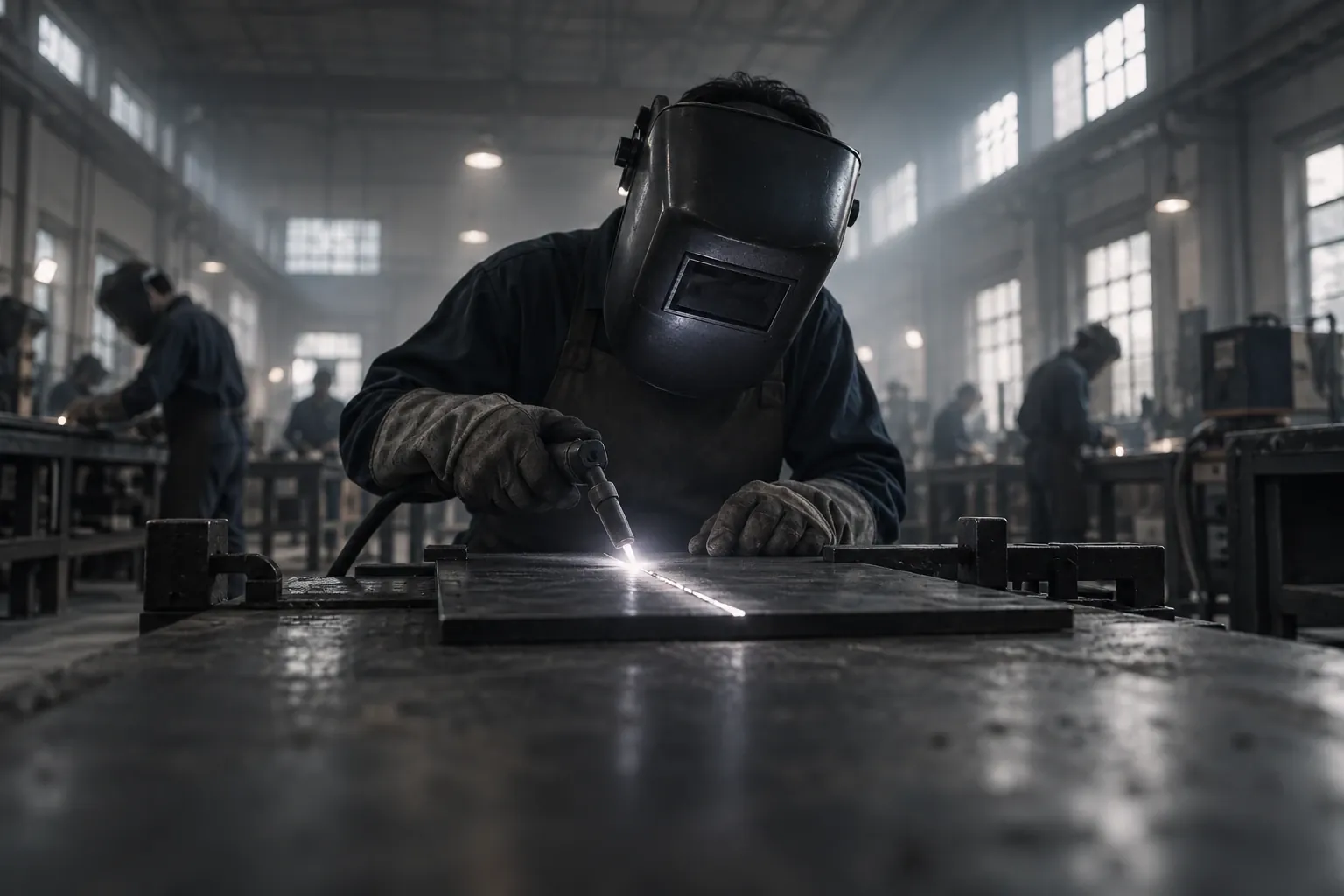
As of April 1, 2026, the Ministry of Skill Development and Entrepreneurship (MSDE) has effectively closed the era of theory-only vocational education. With a record ₹6,140.50 Crore allocation specifically for the PM-SETU scheme, the government has issued a decisive mandate: Simulation-First. The success of an ITI is no longer measured by the number of students seated in a classroom — it is measured by the "competency score" achieved in high-fidelity immersive environments.
"By the time an ITI graduate walks onto a factory floor in 2026, they don't look like a trainee — they look like a veteran."
1. The Hub-and-Spoke Revolution: Architecture for Scale
PM-SETU isn't just throwing money at old classrooms; it is restructuring the map of Indian labour. The program has operationalised a Hub-and-Spoke model across 1,000 ITIs:
- The 200 Hubs: "Centres of Excellence" equipped with high-end VR pods, haptic feedback suits, and digital twin stations.
- The 800 Spokes: Access points where students use mobile XR kits to practise the basics before travelling to a Hub for final certification.
A student in a Tier-3 town in Odisha now has the same access to a "Virtual Semiconductor Cleanroom" as a student in Bengaluru.
2. Hazardous Trades & Zero-Risk Mastery
The most critical pillar of the 2026 mandate is the Zero-Risk Mastery protocol for hazardous trades. Sectors like High-Voltage Power Distribution, Petrochemicals, and Heavy Engineering now require a mandatory 50 hours of immersive simulation before a student is permitted to touch live equipment.
- Mistakes are free: A student can experience a simulated gas leak or electrical arc-flash. They learn the muscle memory of emergency response without a single drop of chemicals being spilled.
- Infinite repetition: Unlike a physical engine that needs painstaking reassembly, a VR engine can be reset in two seconds — a student can practise a 10-minute assembly task 50 times in a single day.
3. The AVGC-XR Nodal Switch: From Operator to Architect
Under Para 60 of the 2026 Union Budget, the government has linked PM-SETU with the establishment of 15,000 Content Creator Labs. This has turned the Indian technician into a "Technical Artist." With IICT Mumbai acting as the nodal centre, ITI students are now being trained to build the very simulations they use. A student can graduate as a certified welder, but also as an XR Content Moderator capable of updating digital twins for local factories.
4. Outcome-Based Governance: The DLI Metric
The most significant change in 2026 is the Disbursement-Linked Indicators (DLI). For the first time, ITIs do not get their full funding just for buying hardware. They receive funds in tranches based on:
- Employment outcomes: Direct placement data verified by industry partners.
- Simulation fidelity: Proving that the virtual training environment matches the real-world factory floor (Digital Twin accuracy).
- Inclusive access: A high percentage of female and rural participation in high-tech trades.
The IIM Indore-led audit team ensures that ₹6,000 crore isn't just spent, but invested.
Conclusion: The 'Viksit Bharat' Workforce
The 2026 Simulation-First mandate is more than a tech upgrade; it's a cultural shift. We are moving away from a workforce that "knows about" machines to one that has mastered them virtually. India's competitive edge isn't just the size of its population — it's the speed at which that population can be simulated into experts.
Strategic Insights for Industry Leaders
- SPV participation: Manufacturing giants are forming Special Purpose Vehicles to take over Hub ITIs, custom-building VR modules for their specific supply chains.
- The sovereign skill stack: To protect industrial secrets, MSDE mandates that all simulation data be hosted on the Sovereign Cloud — keeping India's manufacturing know-how within its borders.
Request a Technical Briefing
Our team provides direct support for procurement officers, institutional buyers, and enterprise technology leads.