Industry Insights · Education · Creator Economy
The Creator's Hardware. Why 15,000 New Content Labs Are Choosing Made-in-India XR.
By QWR Technical Marketing
The National AVGC-XR Policy and state-level allocations are building India's content creator infrastructure from scratch. A note on why sovereign, builder-first hardware is beating walled-garden imports.
The Graduation of the Indian Creator
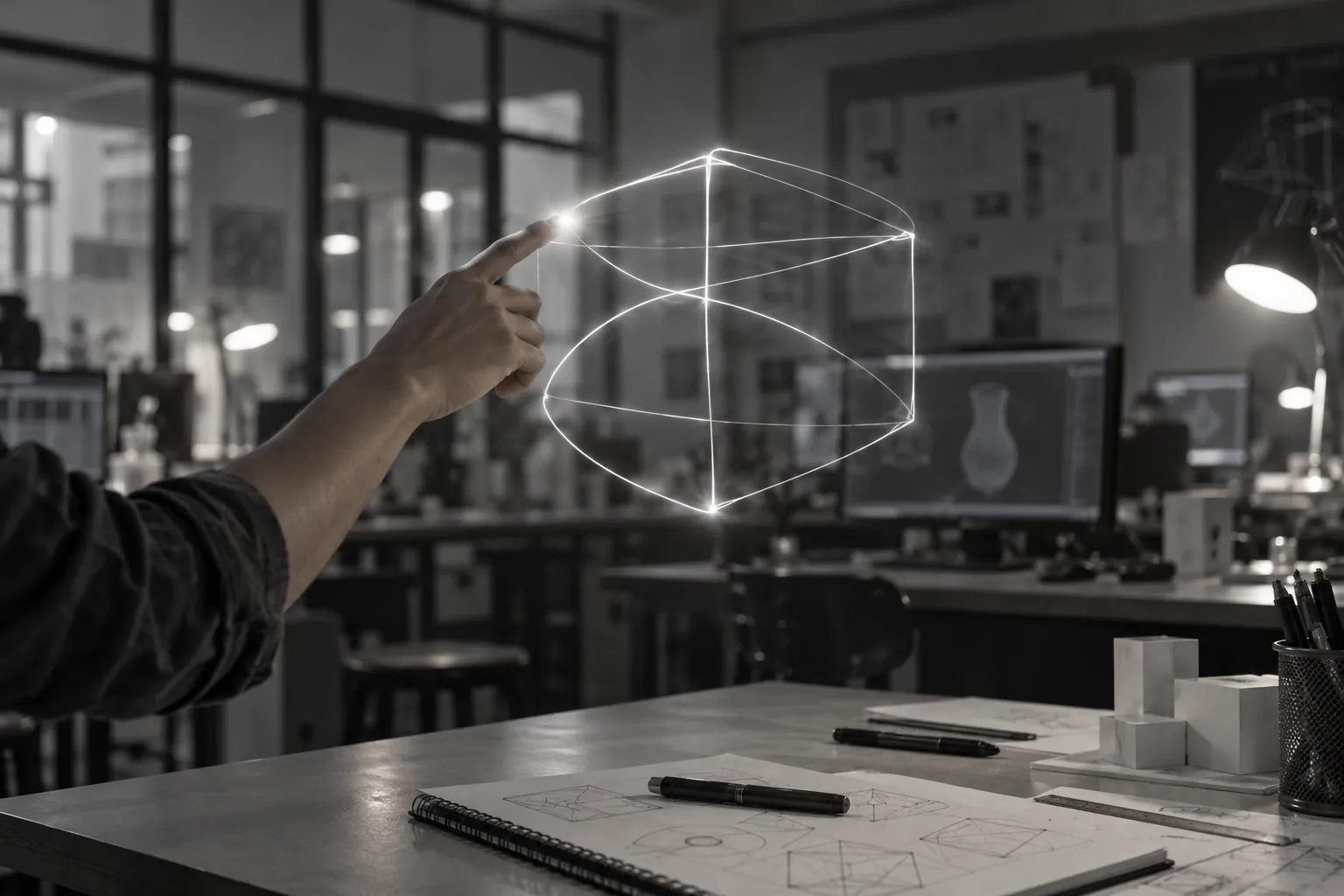
For the last decade, "content creation" in India was defined by the rectangular screen — vlogging on smartphones, editing on laptops, scrolling through 2D feeds. As we move into the second quarter of 2026, the medium is undergoing a tectonic shift. We are entering the era of Spatial Content, where the world is the canvas, the interface is 3D, and the viewer is an active participant.
The government's aggressive push via the National AVGC-XR Policy and the Tamil Nadu AVGC-XR Policy 2026 — which aims to create over 200,000 high-value jobs in five years — has created a massive infrastructure vacuum. Educational institutions, private design schools, and regional creative hubs are suddenly tasked with building Content Creator Labs.
"The tools used to create India's digital future should be designed, developed, and serviced in India. If the labs are sovereign, the IP will be too."
1. The 'Creation vs. Consumption' Gap
Most global consumer XR headsets were built for consumption — watching immersive movies or playing AAA games. They operate as walled gardens, making it difficult for a student in a Coimbatore ITI or a young creator in a Mumbai studio to export their own 3D assets or manipulate the underlying OS for custom interactions.
The QWR ecosystem is built on a Builder-First philosophy using Open-Spatial standards:
- Developer-First SDKs: Our hardware is natively optimised for the Android XR platform — the 2026 industry standard. Students build once, deploy seamlessly across the entire QWR fleet without fighting proprietary middleware.
- Direct asset injection: Students can move from a 3D modelling suite (Blender, Maya) directly into a QXR-06-10 environment with zero-latency tethering — the standalone 6DoF headset's USB-C DisplayPort-out supports a wired PC link for exactly this workflow. A change made on the desktop is visible in the headset instantly — a feature gated behind "Pro" subscriptions in foreign units.
2. HUMBL AI: The Prompt-to-World Engine
As of 2026, the biggest barrier to XR creation isn't imagination — it's the staggering complexity of 3D coding. HUMBL AI democratises this by changing the entry requirement from "Coding" to "Conversation."
- Voice-driven world building: A student no longer needs to map coordinates. They say, "HUMBL, generate a 3D physics-enabled model of a traditional Indian stepwell for this history module, and set the lighting to sunset" — and the AI handles asset generation, texture mapping, and spatial anchoring.
- On-device multimodal processing: Most AI tools in 2026 are cloud-reliant — a dealbreaker for Tier-II and Tier-III schools with variable upload speeds. HUMBL processes creation prompts locally. A creator in a rural polytechnic gets the same sub-second response time as a high-end studio in Bangalore.
3. The Economic Realities of the 15,000 Labs
The ₹250 Crore allocation in the Union Budget for school-level labs sounds substantial, but distributed across 15,000 secondary schools, the "Cost per Seat" becomes the deciding factor between a successful rollout and a failed pilot.
- Bypassing the import tax: Foreign headsets in 2026 are still subject to "luxury tech" duties and shipping volatility. QWR hardware qualifies for MSME procurement preferences and avoids the 15–20% price inflation on imported units.
- Domestic serviceability: A broken strap or cracked lens on a foreign unit often means a 4-week wait and out-of-warranty friction. QWR's domestic manufacturing base measures lab downtime in hours.
- Built for the Indian classroom: Sweat-proof face interfaces, reinforced head-straps, and thermal management that survives back-to-back 6-period school days in Indian summer temperatures.
4. From 'Create in India' to 'Export to the World'
The Tamil Nadu AVGC-XR Policy targets a 20% share of the global immersive content export market by 2030. To reach that, the Indian workforce must move beyond outsourcing and toward Spatial Storytelling and IP ownership.
- IP protection and sovereignty: Using an Indian hardware and software stack gives creators absolute control over their data. Digital twins of sensitive Indian heritage sites or indigenous gaming characters stay on secure, sovereign servers.
- Mastering the new HCI: The global interfaces of 2027+ won't use mice and keyboards; they'll use the gaze, gesture, and voice interactions HUMBL is pioneering today. Students training on QWR hardware are learning the Universal UI Language of the next decade.
5. Scaling the Future: The 'Hub-and-Spoke' Model
A central university hub uses high-end 6DoF platforms to create content, which is then streamed or deployed to hundreds of Spoke schools using more affordable 3DoF platforms. The hierarchy turns every local school into a portal to the world's best museums, labs, and historical sites — all curated and created by Indian hands.
Strategic Conclusion: Who Will Build the Indian Metaverse?
2026 is the breakout year for Indian spatial computing. The Content Creator Labs being set up today in ITIs, colleges, and private studios will produce the creative directors, game designers, and industrial architects of 2030. If those creators are trained on QWR hardware, they aren't just learning a tool — they are building an industry.
Request a Technical Briefing
Our team provides direct support for procurement officers, institutional buyers, and enterprise technology leads.