Industry Insights · Procurement · Strategy
ODM vs OEM vs Co-Brand. Choosing the Right XR Manufacturing Partnership Model.
By QWR Partner Success
There are three ways to put your brand on a certified XR device without building a factory — and they are not interchangeable. Co-Brand, ODM, and OEM differ on how much you can change, how much IP you own, and how many units you have to commit to. Picking the wrong one means paying for flexibility you don’t need or hitting a wall you didn’t see coming. Here is the comparison, on the three axes that actually decide it.
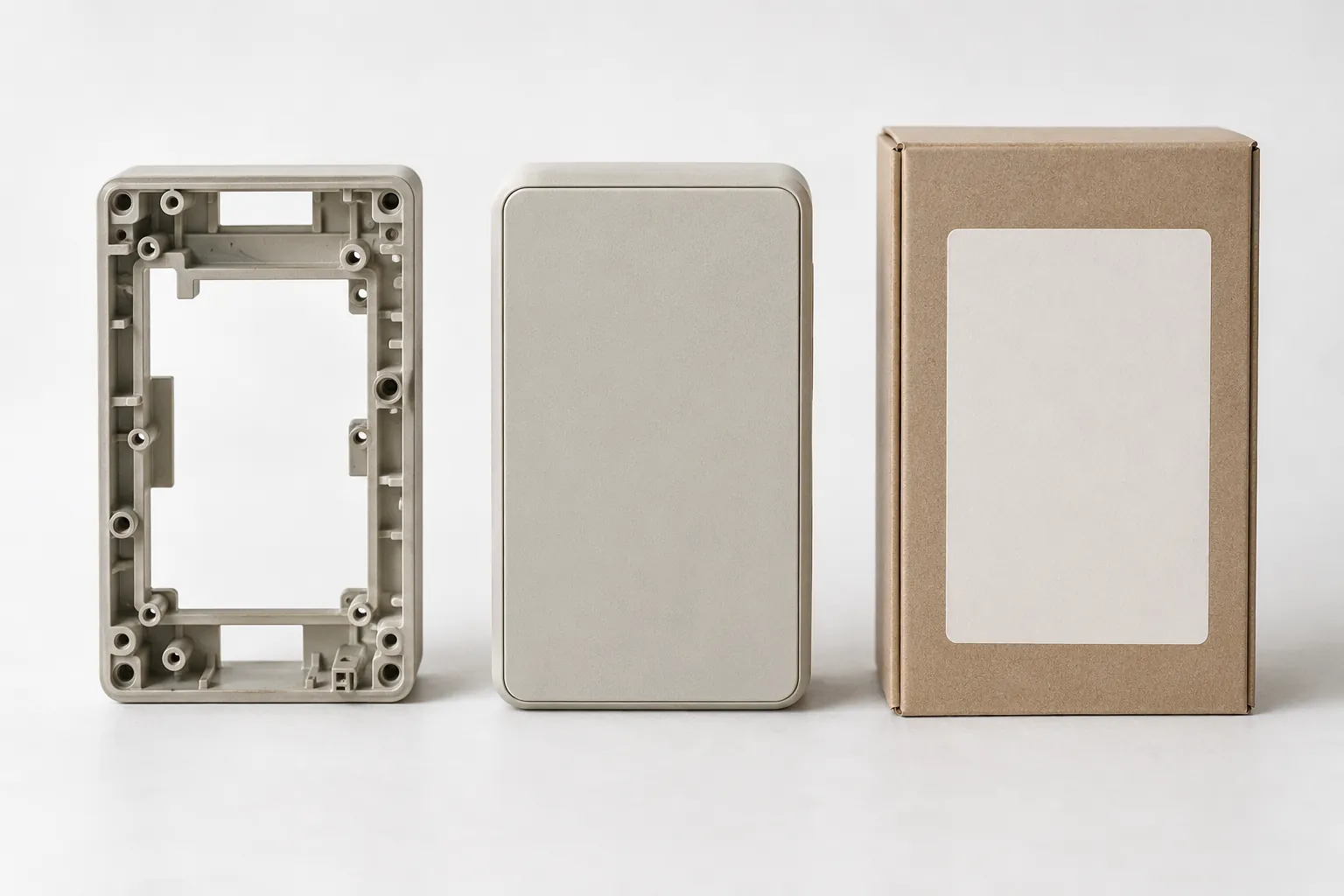
Start Here: This Is the "Which Model" Decision
This paper is about choosing between the three engagement models. Once you've chosen, how to vet the specific partner who runs the model is a separate diligence exercise, and the broader strategic question of building with a partner at all is covered in the OEM partner guide. All three QWR models build on the same certified hardware platform — so the choice is not about hardware quality; it's about the trade between speed, control, and commitment.
"The three models aren't good-better-best. They're fast-flexible-bespoke — and the right one is whichever matches how much of the device actually needs to be yours."
The Three Models in One Pass
- Co-Brand — fastest entry: You launch under your brand on a production-ready platform (such as the Q-Series or HUMBL AI platforms). The hardware is shelf-ready and already certified; you add branding and your experience layer on top. This is the shortest path to a device in market.
- ODM — most flexible: You build on QWR's validated white-label platform with deep BOM-level customisation and a dedicated firmware branch. You own the final product; QWR owns the manufacturing. This is the middle path — a differentiated device without engineering one from a blank sheet.
- OEM — full custom: You bring your own hardware specification and QWR manufactures to it, with custom firmware and software. This is for partners who already have industrial-design files and want a device built exactly to spec.
Axis 1 — Customisation Depth: How Much Can You Actually Change?
- Co-Brand is brand-and-experience deep: You control branding and your software/UX layer on a fixed hardware platform. The device is essentially decided; you make it recognisably yours at the surface.
- ODM is BOM-and-firmware deep: Deep BOM-level customisation plus a dedicated firmware branch means you can change what's inside within the platform's engineering boundaries — the hard-point/soft-point framework in Design Customization defines exactly where. This is where most serious enterprise products land.
- OEM is ground-up: You define the hardware specification itself. Maximum control, maximum engineering effort — appropriate only when the product genuinely requires hardware that doesn't already exist on the platform.
Axis 2 — IP Ownership: What Do You Walk Away Owning?
- The headline QWR position is strong: in both ODM and OEM you get full IP ownership of the final product. That is a materially better default than many white-label arrangements, and it's the single most important line to confirm in your contract.
- Co-Brand: you own your brand and experience, not the base platform. Because you're launching on QWR's production-ready platform, the underlying hardware IP remains QWR's — you own the brand skin and UX layer on top. Ideal for speed; understand you are branding a shared platform, not owning a unique one.
- OEM: you own 100% of the product IP, including the specification. Since you arrive with the hardware spec, you own the whole design outcome. ODM sits between: you own the final product you built on the platform, while QWR retains the manufacturing. Match the ownership you need to the model — and get it in writing, since "stated" is not "signed."
Axis 3 — Minimum Order Quantity and Commitment
- Co-Brand has the lowest bar: It supports single-digit unit samples, making it the natural route for an early pilot or a market test before committing capital.
- ODM starts at pilot scale: Full ODM projects begin at 5,000-unit pilot runs and scale to 100,000+ units per year on 30-day ramp notice — the model for a committed product line, not a trial.
- OEM is scoped to your programme: Volume follows your specification and forecast. The MOQ ladder is really a commitment ladder: the deeper the customisation and ownership, the more units the economics require you to commit.
How to Choose: Match the Model to the Product
- Choose Co-Brand when speed and low commitment win: You need a branded, certified device in market quickly, your differentiation is software and brand rather than hardware, and you want to validate before committing to volume.
- Choose ODM when you need a differentiated product on a proven base: Your product requires specific components, sensors, or a firmware identity, but engineering a headset from scratch is unjustified risk. You want to own the final product without owning a factory. This is the default for most enterprise and institutional buyers.
- Choose OEM when the hardware itself is your differentiation: You already hold industrial-design files or need hardware that no platform offers, and owning 100% of the specification is worth the added timeline and cost.
Strategic Conclusion: Pick the Trade, Not the Tier
Co-Brand, ODM, and OEM are not rungs on a quality ladder — every path uses the same certified platform and manufacturing. They are three different trades between speed, control, and commitment: Co-Brand buys speed by accepting a shared platform; OEM buys total control by accepting the cost of a ground-up spec; ODM buys differentiation and final-product ownership on a proven base. Name what your product actually requires — surface branding, internal customisation, or bespoke hardware — and the model chooses itself. Then move on to vetting the partner who will run it.
FAQ
Frequently asked questions
What is the fastest way to get a branded XR device to market?+
Co-Brand, launching under your brand on a production-ready platform like the Q-Series or HUMBL AI, supporting single-digit unit samples for an early pilot or market test.
Who owns the IP in each of the three manufacturing models?+
In Co-Brand, you own your brand and experience layer but not the base platform. In ODM, you own the final product while QWR owns the manufacturing. In OEM, you own 100% of the product IP including the specification.
What is the minimum order quantity for each model?+
Co-Brand supports single-digit unit samples. ODM starts at 5,000-unit pilot runs, scaling to 100,000+ units a year. OEM volume is scoped to the partner's own specification and forecast.
Request a Technical Briefing
Our engineering team provides direct support for procurement officers, institutional buyers, and enterprise technology leads.